Learn Japanese
A friend has invited you to do this with them.
Written Japanese mixes three scripts in a single sentence, with hiragana carrying the grammar, katakana the borrowed words and kanji the core meaning. You can start for free with the Japan Foundation's own coursebook and online course, then test yourself against the five levels of the official JLPT.
DemandingUnder £100 / $130MonthsIndoorsAlone or with othersUK and US
Pick a day or month, get a step-by-step plan, and see it in My year and your own calendar.
No date: keep it on your list for some day. See my list
In my year: See it in My year See the plan
Christmas present ideas for someone who wants to learn Japanese
Presents that help someone get started, drawn from this page. They are ideas, not recommendations: we have not tested any of the products, so check sizes and details before you buy.
Kit to give
- Hiragana and katakana workbookAmazon for practicing the two beginner scripts by hand
- Genkouyoushi practice notebookAmazon squared paper for writing kana and kanji neatly
- Japanese-English dictionaryAmazon for looking up words as you read
Or give your company
Some of the best presents cost little: offer to go along the first time. Print a promise card to put under the tree.
Some of these are affiliate links: if you buy or book through them we may earn a commission at no extra cost to you. Amazon links are searches, so compare what comes up.
More Christmas gift ideas for people who love doing things Stocking fillers
What learning Japanese is really like
The first hurdle is the writing. An explainer from the Japanese publisher ALC sets out the three scripts as a team. Hiragana handles particles and grammar endings, katakana is used mainly for foreign words, names and sound words, and kanji carries the core of nouns, verbs and adjectives. A sentence such as "I like coffee" uses all three.
City Lit runs a separate Saturday writing course for beginners on hiragana and katakana alone. Kanji comes more slowly. The Japan Foundation's free Irodori books teach 429 kanji across their first three parts, each one met in a conversation or reading passage.
To measure progress, the Japanese-Language Proficiency Test has five levels, from N5, the easiest, to N1. At N5 you can read simple sentences in hiragana, katakana and basic kanji and follow slow classroom exchanges. At N1 you can read editorials and follow lectures at natural speed. The test is held twice a year, in July and December, though some overseas cities offer only one session, and it has no speaking or writing section.
Ways in
| Where | Format | Cost (as last listed) |
|---|---|---|
| JF Japanese e-Learning Minato (Japan Foundation), online | Marugoto A1-1 (Katsudoo) Self-Study Course, about 24 hours, taught in English, six months' access; enrolment opens in application periods | Free |
| Irodori (Japan Foundation), download | Coursebook in PDF from Starter (A1) to Pre-Intermediate (A2/B1), with audio to download or stream | Free |
| City Lit, London or online | Japanese beginners taster, 90 minutes online | £19 |
| City Lit, London or online | Japanese beginners module 1, followed by modules 2 and 3 | £259, or £168 concession, per module |
| The Japan Foundation London | Japanese from Scratch, single-evening workshops several times a year for people just starting | Not listed on the courses page |
| Japan Society, New York or Zoom | Ten-week courses from Level 1 for adults 18 and over; no placement exam for complete beginners | $360, or $310 for members, for a 10-class course; textbook may be extra (fall 2026 term; that term is under way) |
The Japan Foundation London also keeps a directory of schools, universities and other organizations that teach Japanese across the UK, if you want a class nearer home.
How to start
- Try a short taster first, such as City Lit's 90-minute online Japanese beginners taster, or the Japan Foundation's free self-study course Marugoto A1-1 (Katsudoo) on its Minato site.
- Book a beginners' class that starts at level 1, such as City Lit's Japanese beginners module 1 in London or online, or a Level 1 term course at Japan Society in New York or on Zoom.
- Download the free Irodori coursebook and audio from the Japan Foundation for extra practice, and look at the JLPT N5 description to see what the first level expects.
Where to go
- JLPT: N1-N5 summary of linguistic competence required for each level
- City Lit: Japanese courses for beginners (London and online) UK
- The Japan Foundation London: Japanese courses UK
- Japan Society: Fall Japanese Courses (New York and online) US
- Irodori: Japanese for Life in Japan (free coursebook and audio)
- JF Japanese e-Learning Minato: Marugoto A1-1 (Katsudoo) Self-Study Course
We opened these links on 22 November 2026 and found them to be what we say. Dates, places and prices are on the official page, where they stay up to date.
Add to my year
Pick a day or month, get a step-by-step plan, and see it in My year and your own calendar.
Your dated plan
Choose when, and we will set out how to get ready, step by step, with a date and a reason for each. Courses and classes have start dates and can fill up, so the plan begins with finding and booking one. Kit comes after the first session, once you know what you need.
Or just want the links? Plan it yourself Free
The links you need to book it, get there, find somewhere to stay and eat, and see what else there is to do nearby. They are searches for you to run; nothing is saved.
Show the links
Questions people ask
What are the three Japanese alphabets?
Hiragana, katakana and kanji. Hiragana is used mainly for grammar, katakana mainly for foreign words and names, and kanji for the core meaning of words, and all three can appear in one sentence.
What is the easiest JLPT level?
N5. The levels run from N5, the easiest, to N1, the hardest, with N3 bridging the lower and upper levels.
Is there an age limit for the JLPT?
No. The official JLPT FAQ says there is no age limit, though local test centers may set their own requirements, so check with the host institution in your city before you register.
Can I learn Japanese for free?
You can make a good start. The Japan Foundation's Irodori coursebook and audio are free, and its Marugoto A1-1 (Katsudoo) self-study course on the Minato site is free when enrolment is open.
Where this comes from: JLPT, N1-N5 summary of linguistic competence required for each level; JLPT, Frequently Asked Questions; ENGLISH JOURNAL (ALC), What's the Difference Between Hiragana, Katakana and Kanji?; City Lit, Japanese courses for beginners; The Japan Foundation London, Japanese courses; Japan Society, Fall Japanese Courses 2026; Irodori, About Irodori; The Japan Foundation, Free! New Teaching Materials "Irodori Japanese for Life in Japan"; JF Japanese e-Learning Minato, Marugoto A1-1 (Katsudoo) Self-Study Course. Opened 22 November 2026.
Read next
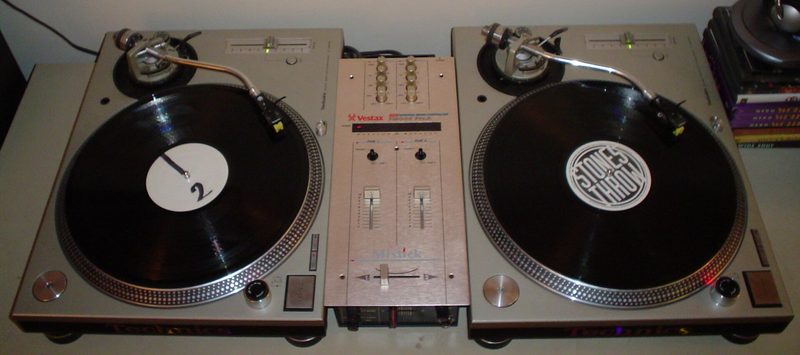
Two radio mixes and a festival slot: Melanie Harris's first year as a DJ
How Melanie Harris, a lifelong clubber from Walsall, learned to DJ as Mom-A-Vibez, had mixes played on UK radio and was booked for Birmingham's Mostly Jazz, Funk and Soul Festival; and how to learn to mix yourself, from a first course to a first set.

From the Latest Music Bar to the hospital lab: Angi Mariani's first in biomedical science
How a Brighton music-bar owner and TV presenter took a part-time science degree alongside a hospital lab job, what national figures say about who keeps learning, and how to find a course or a way into laboratory work.
More like this
Gentle
Learn shodō, Japanese calligraphy
Moderate · Japan
Explore the temples and shrines of Kyoto
Gentle · Japan
See the cherry blossom in Japan
Demanding
Learn a language to CEFR level B1