Learn to ferment vegetables on a class
A friend has invited you to do this with them.
Shredded cabbage, salt and a few weeks at room temperature turn into sauerkraut with no cooking at all, and the same idea gives you kimchi and sour dill pickles. A hands-on class shows you how much salt, how to weigh the vegetables down and what to watch for, and you usually take your jars home.
GentleUnder £100 / $130An afternoonIndoorsAlone or with othersUK and US
Pick a day or month, get a step-by-step plan, and see it in My year and your own calendar.
No date: keep it on your list for some day. See my list
In my year: See it in My year See the plan
Christmas present ideas for someone who wants to learn to ferment vegetables on a class
Presents that help someone get started, drawn from this page. They are ideas, not recommendations: we have not tested any of the products, so check sizes and details before you buy.
Kit to give
- Fermentation weightsAmazon to keep the vegetables under the brine
- Glass jars with clip-top lidsAmazon some classes ask you to bring your own jars
- Pickling saltAmazon the tested sauerkraut recipe uses canning or pickling salt
Or give your company
Some of the best presents cost little: offer to go along the first time. Print a promise card to put under the tree.
Some of these are affiliate links: if you buy or book through them we may earn a commission at no extra cost to you. Amazon links are searches, so compare what comes up.
More Christmas gift ideas for people who love doing things Stocking fillers
What it's really like
Sauerkraut is cabbage and salt. The National Center for Home Food Preservation's tested recipe uses 3 tablespoons of canning or pickling salt for every 5 lb (about 2.3 kg) of cabbage. It says kraut ferments fully in about 3 to 4 weeks at 70 to 75°F (about 21 to 24°C), takes 5 to 6 weeks at 60 to 65°F (about 16 to 18°C), may not ferment below 60°F and may go soft above 75°F. If you weigh the cabbage down with jars rather than a brine-filled bag, you check it two or three times a week and skim off any scum, and fully fermented kraut keeps for several months tightly covered in the fridge.
A class is short and practical. Surrey's two-and-a-half-hour class makes a red kraut and a kimchi, and asks you to bring your own glass jars. UGA Cooperative Extension's three-hour kimchi class uses the National Center's tested recipe and sends you home with a batch of kimchi, the dry ingredients and a food scale to make more.
Ways to start compared
| Where | Format | Cost (as last listed) |
|---|---|---|
| The School of Artisan Food, Welbeck, Nottinghamshire | One day, 10am to 4.30pm; what you make depends on the season and may include kimchi, sauerkraut and pickles; lunch and jars included (last listed August 2026) | £215 to £220 |
| Surrey County Council Adult Learning, Guildford | One 2.5-hour session; red kraut and kimchi; bring your own jars (last run June 2026) | £30 |
| UGA Cooperative Extension, Albany, Georgia | Three-hour hands-on kimchi class; take home kimchi, ingredients and a food scale (last run August 2026) | $10 |
| UC Cooperative Extension Orange County Master Food Preservers, Irvine, California | Two-hour hands-on class; small-batch sauerkraut and brined dill pickles; limited to 20 (last run October 2025) | $35, plus an optional $5 for a loaner apron |
Both School of Artisan Food dates in 2026 were listed as fully booked, and the school says it cannot cater for severe food allergies or coeliac disease.
How to start
- Find a beginners' fermenting class at an adult learning centre, a cookery school or, in the US, a county extension office or Master Food Preservers group.
- Ask what you will make and whether to bring jars; some classes supply them, others ask you to bring clean glass jars with lids.
- At home, start with a tested recipe, such as the National Center for Home Food Preservation's sauerkraut, and follow its salt amounts exactly.
Where to go
- The School of Artisan Food: Introduction to Fermentation & Pickling (Nottinghamshire) UK
- Surrey County Council Adult Learning: Gut Health Cookery, Kim Chi & Krauts (Guildford) UK
- UGA Cooperative Extension: Make Kimchi Safely at Home Workshop (Georgia) US
- National Center for Home Food Preservation: tested sauerkraut recipe
We opened these links on 21 November 2026 and found them to be what we say. Dates, places and prices are on the official page, where they stay up to date.
Add to my year
Pick a day or month, get a step-by-step plan, and see it in My year and your own calendar.
Your dated plan
Choose when, and we will set out how to get ready, step by step, with a date and a reason for each. Courses and classes have start dates and can fill up, so the plan begins with finding and booking one. Kit comes after the first session, once you know what you need.
Or just want the links? Plan it yourself Free
The links you need to book it, get there, find somewhere to stay and eat, and see what else there is to do nearby. They are searches for you to run; nothing is saved.
Show the links
Questions people ask
Is homemade sauerkraut safe?
Follow a tested recipe. The National Center for Home Food Preservation advises following a reliable recipe exactly, keeping to the salt it specifies, and not eating pickles if spoilage is evident.
How long does sauerkraut take to ferment?
About 3 to 4 weeks at 70 to 75°F (21 to 24°C), or 5 to 6 weeks at 60 to 65°F (16 to 18°C), according to the National Center for Home Food Preservation.
What salt do you use for sauerkraut?
The National Center for Home Food Preservation's recipe uses canning or pickling salt, 3 tablespoons for every 5 lb (about 2.3 kg) of cabbage.
What do I need to bring to a fermenting class?
It varies. Surrey's class asks for two large and two medium glass jars with screw or flip-top lids, while the School of Artisan Food provides jars.
Where this comes from: National Center for Home Food Preservation, Sauerkraut; National Center for Home Food Preservation, Causes and Possible Solutions for Problems with Fermented Pickles; The School of Artisan Food, Introduction to Fermentation & Pickling; Surrey County Council, Gut Health Cookery - Kim Chi & Krauts; UGA Cooperative Extension, Make Kimchi Safely at Home Workshop; UC Agriculture and Natural Resources, Get Your Brine On! Fermentation Fun with Sauerkraut & Dill Pickles. Opened 21 November 2026.
Read next

Geoff Collis traded the flight deck for a bakery bench in Melbourne's north-east
How an airline pilot learned to bake during the pandemic, went back to flying, then chose the bakery for good, and how to bake your first loaf this week or turn a baking habit into something bigger.
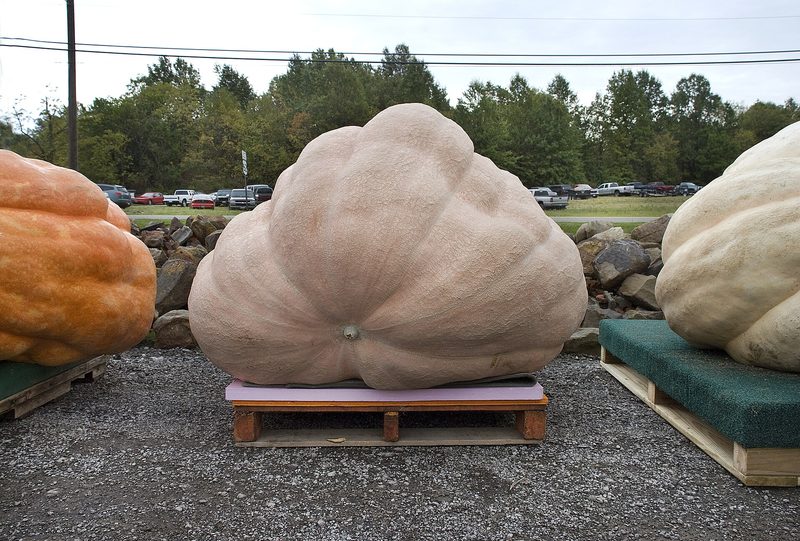
Ron Wallace grew the world's heaviest pumpkin in his first season under glass
Ron Wallace's 3,156lb pumpkin took the world record a week after Ian Paton's 2,856lb 'Bagheera'. How the two growers got there, what a gardening trial found, and how to grow a first pumpkin of your own next year.