Move · 2 October 2026 · 3 min read
From the Golden Gate to the Farallon Islands: Amy Appelhans Gubser's 17 hours in open ocean
Amy Appelhans Gubser, a fetal cardiology nurse from Pacifica, California, was 55 when she became the first person to swim from the Golden Gate Bridge out to the Farallon Islands: 29.7 miles (47.8 km) in a swimsuit, through fog, jellyfish and water that fell to 43°F (6°C). She had been planning it for five years.
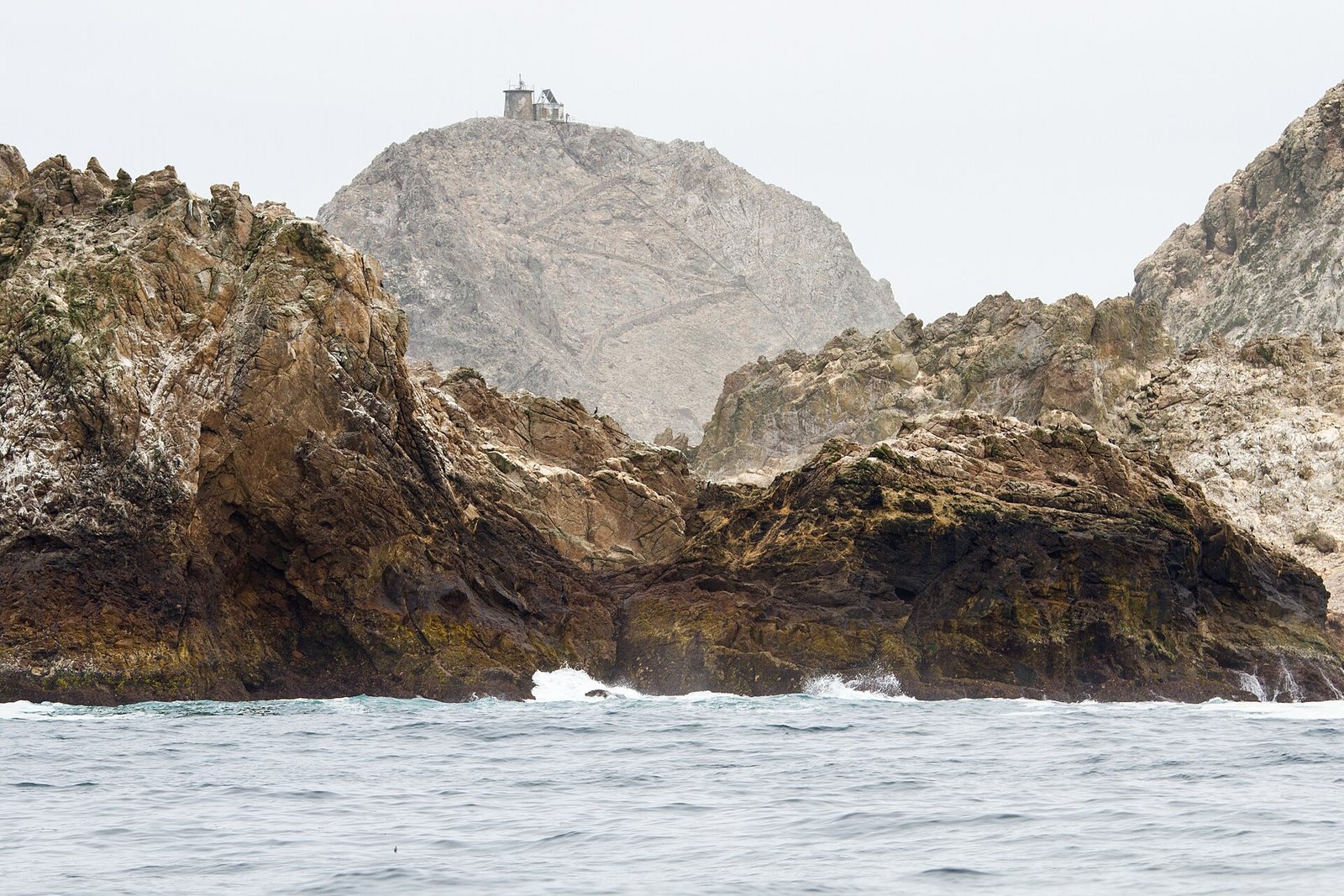
The water under the Golden Gate Bridge was 57°F (14°C) when Amy Appelhans Gubser got in. By the time she reached the Farallon Islands, 29.7 miles (47.8 km) out in the Pacific, it was 43°F (6°C). She was wearing a swimsuit, a cap, goggles and ear protection.
Gubser, who was 55 at the time and lives in Pacifica, California, is a fetal cardiology nurse at UCSF Benioff Children’s Hospitals, with 26 years in nursing behind her. On 11 May 2024 she became the first person to swim from the bridge out to the islands. Five swimmers had made the crossing in the other direction, towards the shore. Nobody had done it the harder way round.
It took 17 hours. For the swim to count she could not touch the support boat, so her crew passed her hot chocolate and warm water from it.
“I wasn’t prepared for 43-degree water, but I was prepared for higher 40s.” — Amy Appelhans Gubser, to KTVU
Fog, jellyfish and bats
There was fog. There were jellyfish she could not see coming in the dark water, and bats overhead. The Farallones are known for their great white sharks; her crew saw seals and no sharks. “You assume anything that touches you in the water is a shark,” she told UCSF.
None of it was improvised. Gubser swam for the University of Michigan from 1986 to 1990. She had already crossed the Strait of Gibraltar and the North Channel between Ireland and Scotland, swum in Lake Tahoe, and in 2015 taken part in a two-way relay to the Farallones. The solo idea came in 2019. Five years of planning followed, and her crew watched the currents for three months before choosing a day. She trained at Aquatic Park, she told SwimSwam, to get used to cold water and to swimming against currents.
She credits the day job, too. Critical care teaches you to prioritise, she said, and her patients had shown her what people can withstand.
“I’m an average person and I can accomplish amazing things.” — Amy Appelhans Gubser, to UCSF
Why this matters
The headline number is 29.7 miles. The more useful numbers are five years, three months and a crew of seven. Gubser’s swim was a project: an idea, then a relay to prove the route was possible, then years of cold, ordinary sessions, then a team to keep her safe on the day. That is how ambitious things get done at any level, and it scales down perfectly well to a first open-water mile.
The health case for the training needs no heroics. The World Health Organization recommends 150 to 300 minutes of moderate-to-vigorous activity a week, and links regular activity to lower risk of heart disease, stroke, cancer and diabetes, and to better mood. Three or four swims a week covers it.
If the open water appeals
- Build the engine in a pool first. Distance comes from consistency. Our guide to swimming and cycling after 50 covers lessons, technique and clubs.
- Treat cold with respect. Get in slowly, keep early swims short, and warm up gradually afterwards. If you have a heart condition or high blood pressure, check with your GP (family doctor) before cold-water swimming.
- Never swim alone. Gubser had a boat and seven people. You want a partner, a bright tow float and a supervised venue.
- Pick an event. A date in the diary does for a swimmer what the Farallones did for Gubser. Many open-water events include a one-mile (1.6 km) swim, which is a good first target.
Natalie Grabow learned to swim as an adult and went on to finish the Ironman World Championship. Gubser, asked how open water differs from the pool, gave SwimSwam the short version: your job is to persevere until you break through.
Sources
- Pacifica woman completes historic swim without wetsuit — KTVU Fox 2, 15 May 2024
- Fetal cardiology nurse completes historic swim — UCSF Benioff Children's Hospitals, July 2024
- Amy Appelhans Gubser becomes first person to swim from Golden Gate Bridge to Farallon Islands — SwimSwam, June 2024
- U-M alumnus Appelhans Gubser completes swim from Golden Gate Bridge to Farallon Islands — University of Michigan Athletics, 4 June 2024
- Walking football in Portugal adds life to years (WHO activity recommendations) — World Health Organization, Europe, 29 August 2024
Quotes are taken from the sources above. We link to the original reporting so you can read the full story.
Was this one for you?