AI · 18 October 2026 · 3 min read
In a Tokyo museum, the tour guide is a suitcase Chieko Asakawa dreamed up at an airport
Chieko Asakawa, a computer scientist who has been blind since she was 14, began building a robot suitcase that guides its user in 2017. After a six-month trial at Expo 2025 in Osaka, visitors to the Tokyo museum she runs can take a walk with it three times a day.
The suitcase was the one that noticed the wall. Chieko Asakawa was pushing it through an airport on a business trip when it ran into a wall, and the thought came to her that a suitcase could be made to detect obstacles, The Yomiuri Shimbun reported.
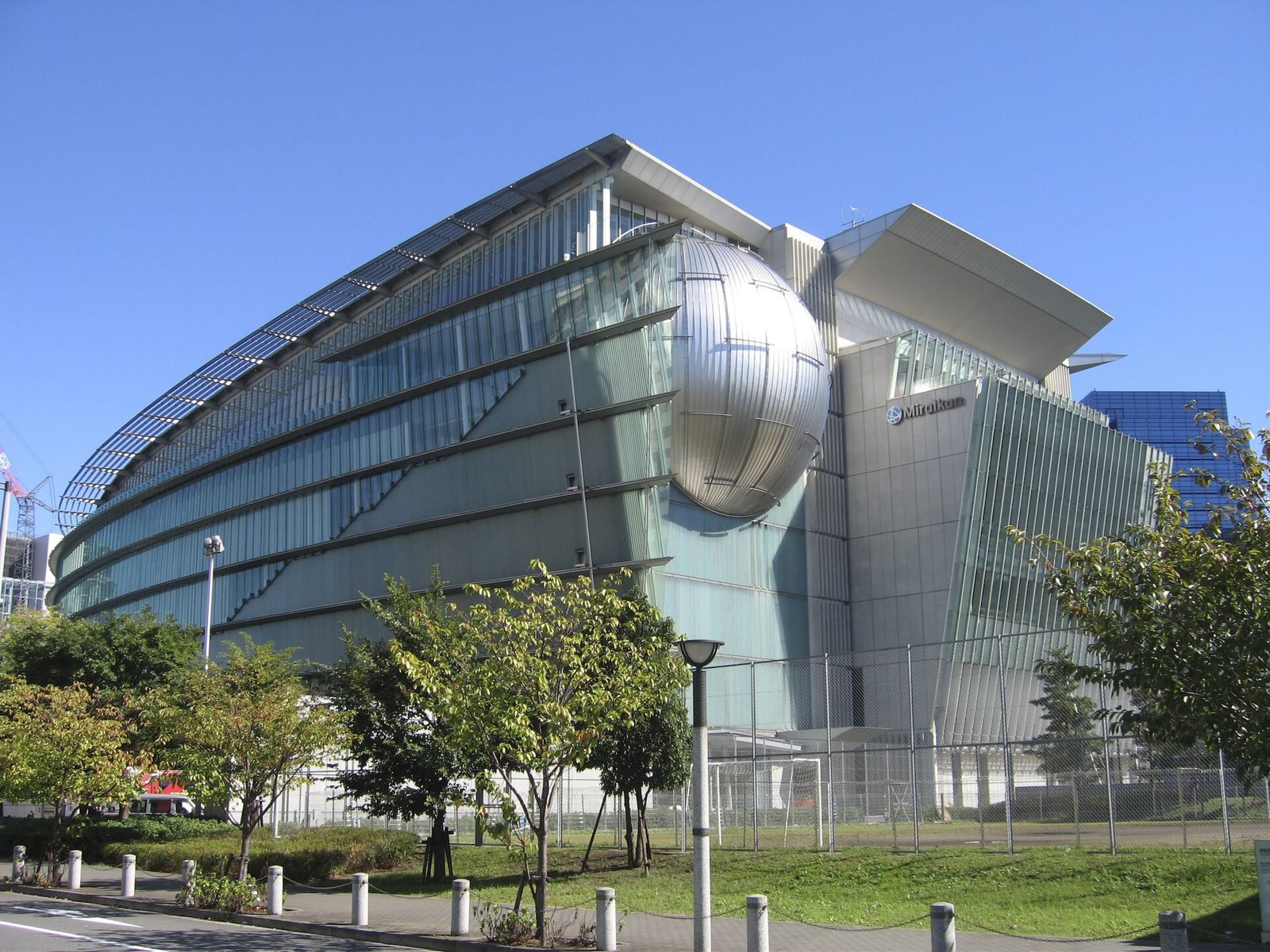
That was around 2017. Asakawa, a computer scientist who joined IBM Japan in 1985 and has been completely blind since she was 14, was then a visiting professor at Carnegie Mellon University in Pittsburgh. She started building it there. Today the suitcase leads tours round Miraikan, Japan’s National Museum of Emerging Science and Innovation in Tokyo, where she has been chief executive director since April 2021.
A suitcase that reads the room
It looks like an ordinary wheeled case. Inside, according to Miraikan, a LiDAR sensor bounces lasers off the walls and matches their shape against a stored map to work out where it is. Depth cameras measure how far away things are, image-recognition AI picks out pedestrians and which way they are moving, and an onboard computer plots a safe route. Outdoors, where there are few walls to measure, it uses satellite positioning corrected by ground stations.
The user sets a destination on a phone app by swiping or speaking, then holds the handle. Let go and it stops. Small plates either side of the handle vibrate to signal a turn.
“With the power of science and technology, we can reduce the gap between people with disabilities and those without.” — Chieko Asakawa, to The Yomiuri Shimbun
From an office corridor to a world expo
The first trial with a user was in an IBM Japan office in March 2021. Airports in Pittsburgh and Hokkaido followed. In September 2022, J-Stories reported, 39 visually impaired people used it for a month in Tokyo’s Nihonbashi district, and all of them arrived safely, without a collision. A regular pilot service began at Miraikan in April 2024, and from April to October 2025 it ran a large field trial at Expo 2025 in Osaka.
The team is clear about the limits. It cannot yet work anywhere that has not been mapped, and mapping one floor of the museum takes a few hours, The Nippon Foundation Journal reported. Crowds are still hard. It has not gone on sale.
“Safety is our top priority when developing this technology.” — Hironobu Takagi, director of Miraikan’s Accessibility Lab, to The Nippon Foundation Journal
Takagi said the team sees it as extending the path that guide dogs pioneered, not replacing them.
Why this matters
Most talk about AI is about chat on a screen. Asakawa’s suitcase is AI doing something physical and specific: seeing a corridor, judging a passer-by, and turning that into a buzz in the hand. Her career runs the same way. At IBM she worked on a digital Braille system and on what the Nobel Prize Dialogue biography calls the world’s first practical voice browser, became the first Japanese woman named an IBM Fellow in 2009, and was inducted into the US National Inventors Hall of Fame in 2019.
“I hope to use the AI suitcase to travel by myself so I can visit friends around the world.” — Chieko Asakawa, to The Yomiuri Shimbun
Try AI that looks for you
The camera-based AI in your pocket does a smaller version of the same job. Be My AI, part of the free Be My Eyes app, describes a photo and answers questions about it, the UK sight-loss charity Henshaws explains. Henshaws also says it is not accurate every time, and Be My Eyes advises against using it for medicine packaging, allergen information, getting about, or anything sensitive and personal.
Those are the two habits that matter with any AI: check what it tells you, and keep private details out. Our guides to checking when AI gets it wrong and what to keep private go further, and your phone’s accessibility settings has the features that are already built in.
If you are in Tokyo, the suitcase tours start at the AI Suitcase Station on Miraikan’s 3rd floor at 10.30am, 1.30pm and 3.30pm on opening days, for the standard entrance fee; registration opens 20 minutes before each one. Visually impaired visitors can book up to three weeks ahead. It is a proof-of-concept trial, so you will be asked to fill in a questionnaire.
Sources
- About the "AI Suitcase" — Miraikan, National Museum of Emerging Science and Innovation, accessed 18 October 2026
- An AI Suitcase 'guide dog' for people with visual disabilities — J-Stories, 30 August 2024
- Blind researcher develops suitcase-cum-navigational tool for visually impaired travellers — The Yomiuri Shimbun (via Asia News Network), 8 March 2023
- 'AI Suitcase' Robot Guides People With Visual Impairments While Avoiding Obstacles and Pedestrians — The Nippon Foundation Journal, 2 July 2024
- Chieko Asakawa (panellist, Nobel Prize Dialogue Tokyo 2025) — Nobel Prize Outreach, 2025
- Be My AI: Powerful visual assistance with AI — Henshaws, updated 5 March 2025
Quotes are taken from the sources above. We link to the original reporting so you can read the full story.
Was this one for you?