Connect · 21 October 2026 · 3 min read
Toasters, fans and a red vacuum: the Cincinnati volunteers who have mended nearly 1,400 cast-offs
On the second floor of a Cincinnati warehouse, a retired engineer, a retired art teacher and a handful of other volunteers take apart what people threw away. What they mend goes to people moving out of homelessness and into homes of their own.
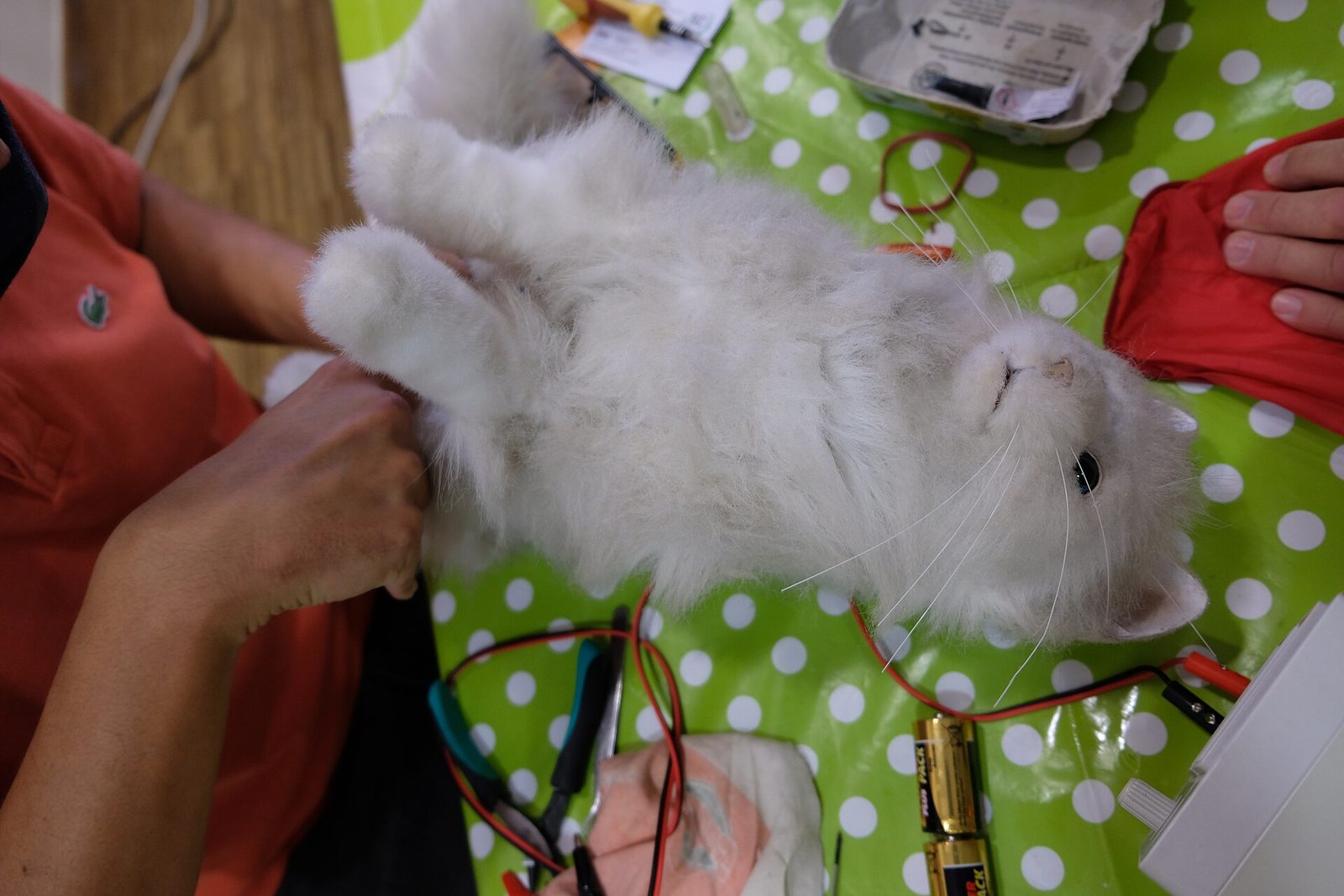
Don Hoffman is bent over a red bagless vacuum cleaner, taking it apart piece by piece to find out why it stopped. Around him, on the second floor of an old warehouse in Cincinnati, shelves of toasters, blenders and lamps have run out of room and spilled on to the floor.
Hoffman is a retired art teacher. He is also one of the Tinker Team, a group of volunteers at the Cincinnati Recycling and Reuse Hub who mend the small electrical things people give away. He has no training in repair.
“I have no background except for things breaking at home.” — Don Hoffman, to WVXU
He told the station he was the kind of child who took things apart to see how they worked.
A pile of things to fix
The team began about a year and a half before WVXU visited in June 2026, after someone at the Hub noticed how many donated items needed only a small repair. By then the volunteers had restored nearly 1,400 household electronics. Six were at work on the day the reporter came.
Mike Conaway, a retired engineer, comes in twice a month. He told WVXU he hates to see things go to waste and clog up landfill, and that he learned it from his father, who could fix anything. Some days, he said, he feels he has become a glorified appliance cleaner.
“Fans are an easy fix. Usually they’re just clogged up with dog hair or whatever, and they need to have the bearings oiled or something.” — Mike Conaway, to WVXU
There is no budget for parts. Spares from things that cannot be saved go into bins, one for coffee makers among them, and what is left is recycled. The volunteers reckon about half of what comes in can be repaired. Each mended item leaves with a Tinker Team sticker, so it can come back if it breaks again.
What leaves goes to a local furniture bank, which helps people coming out of homelessness set up a home. Carrie Harms, the Hub’s operations director and a co-founder, said the appliances help those households “get off on the right foot in that new setting”.
No experience is needed to join. When WCPO visited in 2025, Jerome Wilson, the Hub’s reuse manager, who leads the team, had simple advice for newcomers.
“Jump right in. Grab a toaster.” — Jerome Wilson, to WCPO
Elaine Moscovitz, who used to fix up houses, told WCPO that when she read about the team she thought, “Oh, that’s me.”
Why this matters
Small things add up. The United Nations’ Global E-waste Monitor 2024 found the world threw out a record 62 million tonnes of electrical and electronic goods in 2022, and less than a quarter was documented as properly collected and recycled. Small devices, from microwaves to vacuum cleaners, made up a third of it, and only 12 per cent of those were recycled.
Repair is also a reliable way into company. Volunteering gives you a job to do in a room of people, which is easier than walking in as a stranger. In a survey of 7,006 adults by NCVO, the charity for the voluntary sector in England, 92 per cent of those who had volunteered with a group, club or organisation in the previous year said they were very or fairly satisfied with it.
How to start mending
You do not need a workshop. You need somewhere to go and someone to learn from.
- Find an event. The Repair Café directory lists more than 4,000 repair cafés you can search by distance; in the US, the Community Repair Hub, launched in June 2026 with iFixit and the Restart Project, lists free repair events.
- Go as a visitor first. Take one broken thing, sit with the fixer and watch.
- Start with the easy wins. Small things such as fans and lamps are simpler inside than they look, and a stopped fan is often just clogged, as Conaway found.
- Unplug, always. Never open anything while it is plugged in. Leave microwaves, gas appliances and anything still under guarantee to a professional: parts inside a microwave can hold a dangerous charge after it is unplugged.
- Then offer to help. Most repair groups want people who can sew, sand or solder, and people willing to learn.
Our guide to volunteering has more places to find a role, and men’s sheds, walking groups and clubs covers workshops where people make and mend together.
Sources
- These volunteer 'tinkerers' give old appliances a new life to help others in Cincinnati — WVXU (Cincinnati Public Radio), 15 June 2026
- Volunteer tinkerers bring broken appliances back to life for people in need — NPR, All Things Considered (via WUNC), 16 June 2026
- Grab a toaster: They fix your trash and then give it away. Meet Cincinnati's Tinker Team — WCPO 9 Cincinnati, 25 March 2025
- Global e-Waste Monitor 2024: Electronic Waste Rising Five Times Faster than Documented E-waste Recycling — UNITAR and ITU, 20 March 2024
- Key findings from Time Well Spent 2023 — NCVO, 1 May 2023
- Find a community repair event near you with the new Community Repair Hub — PIRG, 16 June 2026
- Visit a Repair Café — Repair Café International, accessed 21 October 2026
Quotes are taken from the sources above. We link to the original reporting so you can read the full story.
Was this one for you?