Curious · 27 October 2026 · 4 min read
Told to get back to blowing up fuel tanks, David Warren built the black box anyway
In 1954 a fuels chemist in Melbourne proposed recording the last minutes inside an aircraft's cockpit. Australian officials and pilots turned it down. A visitor from Britain saw it over lunch, and the flight recorder went on to every major airliner.
Between 1952 and 1954, seven de Havilland Comets crashed, killing 110 people, according to the National Museum of Australia. The Comet was the world’s first jet airliner. Several broke up high in the air, and there were no survivors, no witnesses and few clues. In 1954 the fleet was grounded.
In Melbourne, a young chemist at the Aeronautical Research Laboratories (ARL) at Fishermans Bend was drawn into the puzzle. David Warren had a PhD in fuels from Imperial College London and had worked at the Woomera rocket range. IEEE Spectrum says he was put on a panel looking at the crashes because fuel tanks were his subject.
A pocket recorder at a trade fair
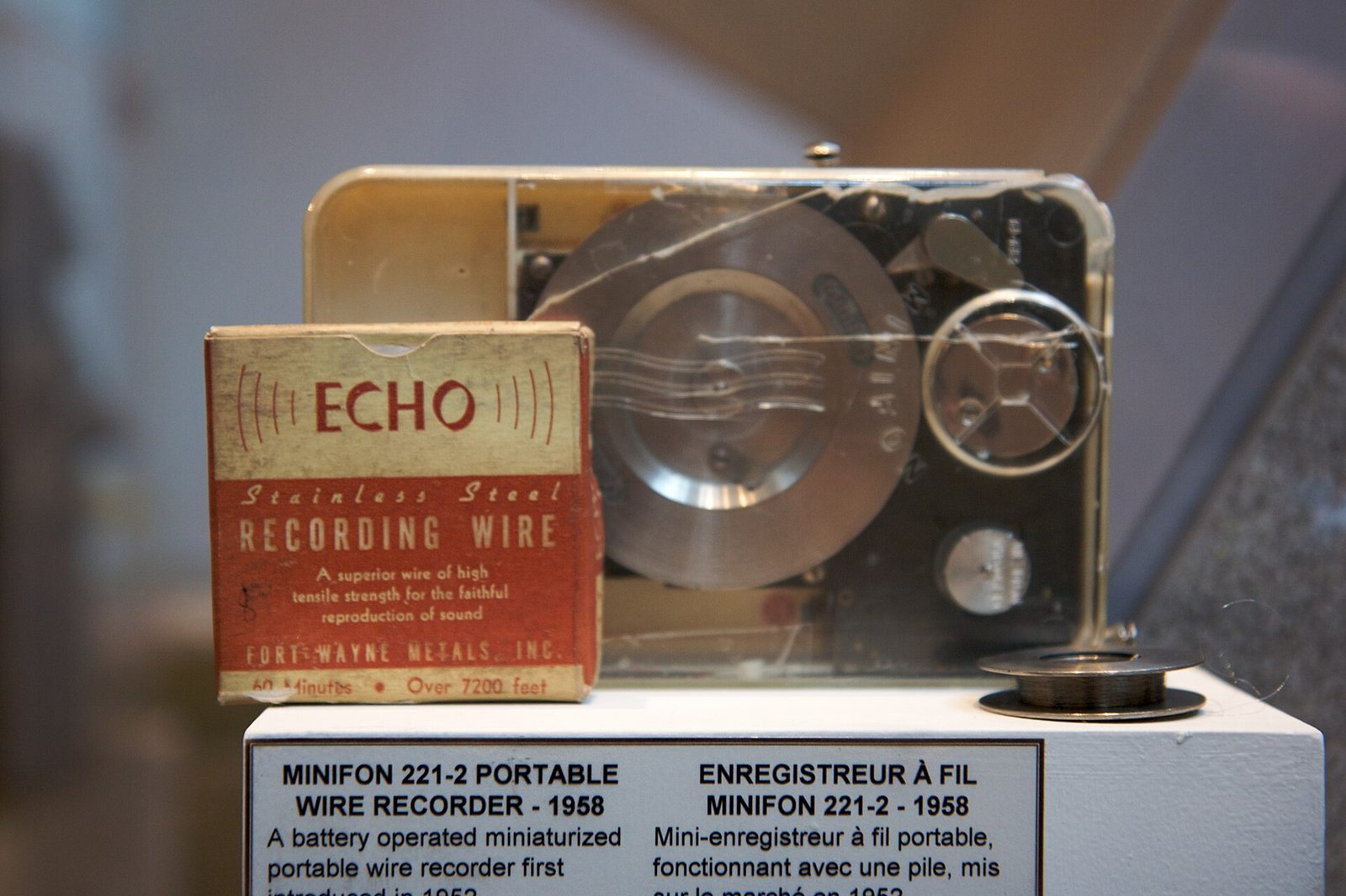
The experts had a problem: the people who could have explained what happened were dead. Warren remembered something he had seen at a trade fair, which IEEE Spectrum places at Sydney’s first post-war fair. It was the Minifon, a German battery-powered pocket recorder that stored voices on magnetic wire and was sold for dictation.
If a recorder like that sat in every aircraft, recording the cockpit on a loop and protected well enough to survive a crash, investigators would hear the last minutes for themselves. In a technical memorandum he proposed exactly that, with the recorder in the tail, the part most likely to survive.
His manager was not interested. Warren later told BBC News, in 2019, that he was told to “get on with blowing up fuel tanks”. The National Museum of Australia says he built a prototype in his garage at weekends.
No thank you, from almost everyone
A new boss, Tom Keeble, backed him, and the National Museum of Australia says Keeble found £600 for a professionally built unit. Melbourne instrument maker Tych Mirfield completed it in early 1958, Museums Victoria says, using parts from two Minifons. It held four hours of cockpit sound plus instrument readings on steel wire, and erased itself unless there was a crash.
Almost nobody wanted it. Australia’s civil aviation officials said it had little immediate use. IEEE Spectrum quotes the Royal Australian Air Force view that it “would yield more expletives than explanations”, and the pilots’ federation objected to having Big Brother listening in the cockpit.
Lunch with Sir Robert Hardingham
The turn came in 1958, almost by chance. Sir Robert Hardingham, secretary of Britain’s Air Registration Board, made an informal visit to ARL and saw, at lunchtime, a demonstration of what the Defence Science and Technology Group describes as Warren’s unofficial project. He was impressed and arranged for Warren to fly to England. There, Museums Victoria says, Warren demonstrated it to the authorities in July 1958, and British manufacturers and operators were keen. In the United States, officials showed little interest.
Then came a disaster at home. On 10 June 1960 a Fokker Friendship crashed at Mackay, Queensland, killing all 29 people on board, and the cause could not be found. The inquiry recommended flight recorders, and Australia became the first country to make cockpit voice recording compulsory.
Where the accounts differ
The histories agree on the shape of the story but not on the dates.
- The idea. The Defence Science and Technology Group says Warren invented the recorder in 1953. IEEE Spectrum dates his memorandum to April 1954; Museums Victoria says it was circulated in May 1954.
- The prototype. The Engineering and Technology History Wiki says 1956, the Defence Science and Technology Group says a demonstration model was produced in 1957, and IEEE Spectrum and Museums Victoria say early 1958.
- The law. Museums Victoria says the minister announced in March 1961 that recorders would be mandatory; IEEE Spectrum says they were required from January 1963; the National Museum of Australia gives 1967 for both data and voice recorders.
- His father. Warren’s father died in an air crash in 1934, when David was nine. It is often told as the reason he invented the recorder. IEEE Spectrum says Warren himself said it was not.
Why “black box”, and why it is orange
The name probably came from those first interviews in Britain. IEEE Spectrum notes that “black box” was RAF slang for a piece of electronics; the Engineering and Technology History Wiki says a journalist coined it at a briefing in England. The boxes themselves are bright red or orange, so they can be found.
Warren was not the only one at work. IEEE Spectrum lists earlier data recorders in France, Britain, Finland and the United States, including James Ryan’s VGA recorder for General Mills, which scratched speed, g-forces and height onto metal foil. Warren’s idea was to record the voices too.
Australia sold ARL’s rights for £1,000 and made nothing more from them, the National Museum of Australia says. Warren was made an Officer of the Order of Australia in 2002 and died in 2010. The fire-tested prototype, its sides bulging from the heat, is in the collection of Museums Victoria.
For another Curious piece about a safety idea now used on roads every night, read how Percy Shaw came up with the cat’s eye.
Sources
- Black box invented — National Museum of Australia, Defining Moments, accessed 27 October 2026
- The Inventor of the Black Box Was Told to Drop the Idea and 'Get On With Blowing Up Fuel Tanks' — IEEE Spectrum (Allison Marsh), 18 June 2021
- The black box flight recorder — Museums Victoria Collections, accessed 27 October 2026
- ARL Flight Memory Recorder, fire-testing prototype, 1958 — Museums Victoria Collections, accessed 27 October 2026
- David Warren, inventor of the black box flight recorder — Defence Science and Technology Group, Australian Government, accessed 27 October 2026
- Black box flight recorder — Defence Science and Technology Group, Australian Government, accessed 27 October 2026
- Flight Data Recorder — Engineering and Technology History Wiki (IEEE History Center), accessed 27 October 2026
Quotes are taken from the sources above. We link to the original reporting so you can read the full story.
Was this one for you?