Curious · 23 October 2026 · 2 min read
A peanut bar, a bag of popcorn and Percy Spencer: the slower truth about the microwave oven
Percy Spencer never graduated from grammar school, yet he ended up with 150 patents and a seat on Raytheon's board. The tale of how he invented the microwave oven is famous. His colleagues remembered it differently.
In 1941, according to the National Inventors Hall of Fame, the magnetron was being made at a rate of 17 a day. The magnetron is the tube at the heart of radar: it produces microwaves, the short radio waves a radar set sends out and listens for as they bounce back.
Percy Spencer, an engineer at the American firm Raytheon, redesigned it so it could be mass-produced. He replaced precisely machined copper parts with stacked metal plates, and soldered internal wires with a solid ring. Output rose to 2,600 a day.
The engineer with no diploma
Spencer was born on 19 July 1894 in Howland, Maine. The Hall of Fame says he never graduated from grammar school. He served in the US Navy and was later awarded its Distinguished Service Medal. At Raytheon he rose to senior vice president and a seat on the board, and over his career he held 150 patents. Raytheon named a building after him.
His most famous one came from working beside those magnetrons. In 1945, the Hall of Fame says, he created a device to cook food with microwave radiation.
The story everyone tells
You may have heard that a chocolate bar melted in his pocket while he stood near a working magnetron. The version IEEE Spectrum, the magazine of the Institute of Electrical and Electronics Engineers, traces in print is a 1958 Reader’s Digest article, and in that telling it was a peanut bar. Spencer then sent out for popcorn, which popped when held near the tube, and tried an egg in its shell, which burst.
IEEE Spectrum is careful with it. Its history calls these tales legends and notes that Spencer’s colleagues remembered a gradual process, not a single moment. That makes sense. Engineers had known for years that radio waves heat some materials; the effect was already used in industry and in medicine. What Spencer had was the magnetron, in large numbers, and the habit of noticing what it did.
From radar to restaurant to kitchen
Spencer filed patents on cooking with microwaves, and one of them, IEEE Spectrum notes, illustrates popcorn popping. Raytheon unveiled the first Radarange in 1946. It was meant for restaurants and for reheating meals on aircraft, and its magnetrons needed a constant flow of cooling water. This was not a kitchen appliance.
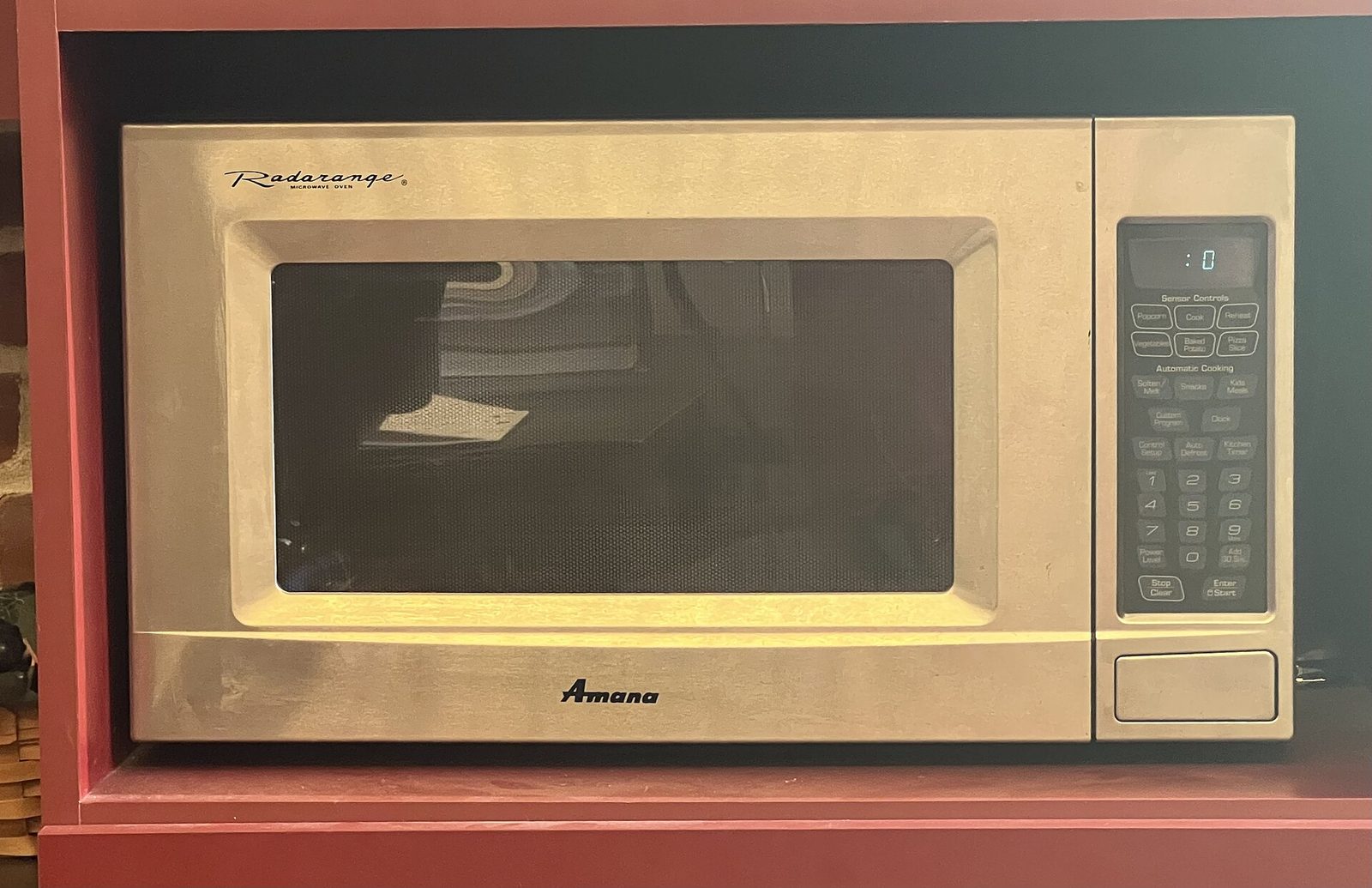
It took two decades to get there. Raytheon bought Amana Refrigeration in 1965, and in 1967 the first Amana Radarange for the home countertop went on sale in the US for $495. The Hall of Fame now puts the number of microwave ovens in use worldwide at more than 200 million. Spencer died on 8 September 1970 and was inducted into the National Inventors Hall of Fame in 1999.
Why the slower version is the better one
The melted-bar story suggests that inventions fall into the lap of whoever happens to be standing in the right place. The longer story says something more useful: Spencer had spent years making magnetrons and knew exactly what he was looking at. The accident, if there was one, landed on a prepared mind.
For a discovery that really did start on a table at home, read how David Smith found the shape mathematicians had sought for decades.
Sources
- National Inventors Hall of Fame Inductee Percy Spencer and the Magnetron — National Inventors Hall of Fame, accessed 23 October 2026
- A Brief History of the Microwave Oven — IEEE Spectrum (Evan Ackerman), 30 September 2016, updated 11 January 2024
Quotes are taken from the sources above. We link to the original reporting so you can read the full story.
Was this one for you?