Explore · 30 October 2026 · 3 min read
Six pairs of shoes and seven months on the Pacific Crest Trail took Nancy Zelick from Mexico to Canada
Nancy Zelick, 63, retired from 25 years of semiconductor research at Intel in September 2025. Six months later she set off from the Mexican border on the Pacific Crest Trail, her first long-distance trail, and on 12 October she touched the monument at the Canadian border.
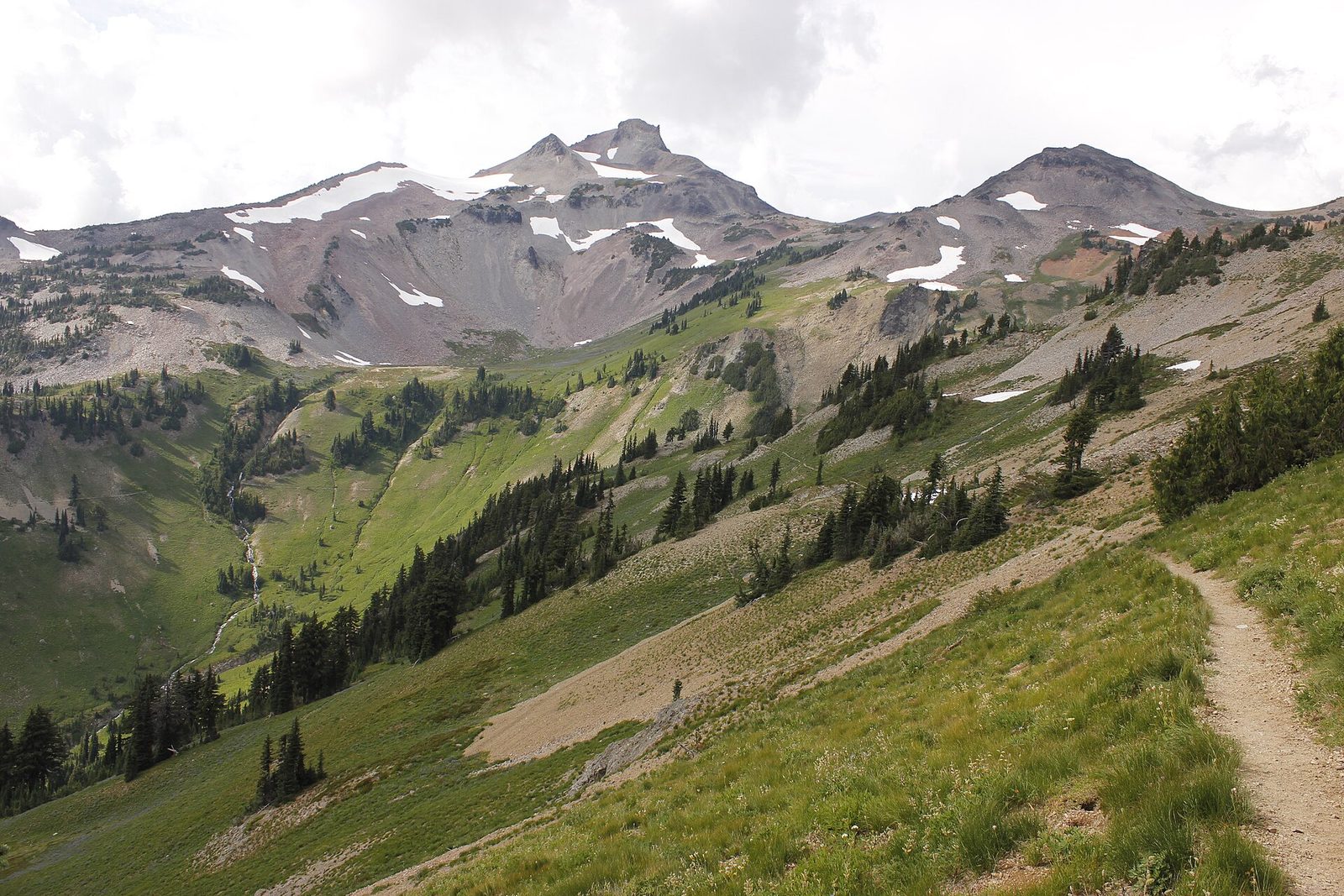
It was nearly dark when Nancy Zelick reached the monument that marks the northern end of the Pacific Crest Trail. On 12 October, almost seven months after leaving the Mexican border, she reached out and touched one of its posts. She was more tired than emotional, she told the Baker City Herald, and mostly relieved.
Zelick, 63, lives in Baker City in eastern Oregon. She grew up in Portland and spent 25 years in semiconductor research at Intel before retiring in September 2025. She had never tried a long-distance trail. On 15 March 2026 she started walking north from the border near Campo, California.
2,650 miles, three states
The Pacific Crest Trail runs 2,650 miles (about 4,265 km) through California, Oregon and Washington, according to the US Forest Service, which manages it. Anyone walking 500 miles or more in one trip needs a long-distance permit, issued by the Pacific Crest Trail Association.
Zelick carried 30 to 40 lb (14 to 18 kg) and restocked roughly once a week, living mostly on peanut butter, tortillas, ramen and chocolate bars. She wore out six pairs of shoes, changed her tent once and her backpack three times, and carried a small folding chair. She saw one bear, three rattlesnakes and the tracks of a cougar. In Northern California a salt-starved deer tried to make off with one of her trekking poles. She got it back.
The Sierra Nevada was deep in snow when she reached it, and the passes were tricky. She fell at times. Her hands and her blisters gave her trouble, and so did a knee injured playing softball as a child.
“It was the hardest thing I’ve ever done.” — Nancy Zelick, to the Baker City Herald
The finish was not simple either. Hikers are no longer allowed to walk on the 8 miles (13 km) into Canada’s Manning Provincial Park, so after the monument she turned round and walked about 30 miles (48 km) back to Harts Pass. Wildfires had closed a 198-mile (319 km) stretch between Snoqualmie Pass and Rainy Pass in Washington; she plans to walk it next summer with her husband, Randy, and a longtime friend.
Why pace mattered
Zelick sees her age and experience as advantages. She knew that rushing, as she might have done when younger, would have cost her.
“If I had tried this in my 20s or 30s, I’m not sure I would have finished.” — Nancy Zelick, to the Baker City Herald
Many of the people she met were less than half her age, and talking to them kept her going. “Even the younger people find it hard,” she said. Randy, who walked about 1,200 miles of the trail in 2021, told the paper she is the goal-oriented one of the two.
Distances changed meaning for her. Standing outside Timberline Lodge on Mount Hood, where she stayed with her mother, she looked south to Mount Jefferson, about 50 miles (80 km) away, and realised she had walked that far in a few days. At the start, eight miles had looked like a long way. By the end, it was what was left at four in the afternoon.
Why this matters
Walking with a pack over hills is exactly the kind of activity both the NHS (the UK health service) and the US Centers for Disease Control and Prevention build their advice around: at least 150 minutes of moderate activity a week, with hiking on the NHS’s own list of examples, and muscle-strengthening on at least two days. A long trail is that, every day, for weeks.
How to start
You do not need seven months. Most long trails are walked in sections, and the skills are learned a day at a time. Start with longer days on hills, then two days back to back, then a few nights out. If you are new to it, our walking holidays guide explains how to choose a first route, and the 8-week walking plan builds the base. Check with a GP (family doctor) first if you have a heart condition or have been told to avoid exertion.
Sources
- Hike of a lifetime: Nancy Zelick of Baker finishes the Pacific Crest Trail — Baker City Herald, 26 October 2026
- Pacific Crest National Scenic Trail: About the Trail — USDA Forest Service, accessed 30 October 2026
- Physical activity guidelines for adults aged 19 to 64 — NHS, accessed 30 October 2026
- Adult Activity: An Overview — Centers for Disease Control and Prevention, accessed 30 October 2026
Quotes are taken from the sources above. We link to the original reporting so you can read the full story.
Was this one for you?