Explore · 14 October 2026 · 4 min read
Stargazing for beginners: what to see, what to bring and where to look through a telescope
Stargazing can be a deckchair in the garden or a night on an observatory roof, and the first evening costs nothing. Here is what makes it easier than it looks, what is hard about it, and where to look through a proper telescope in the UK, the US and Canada.
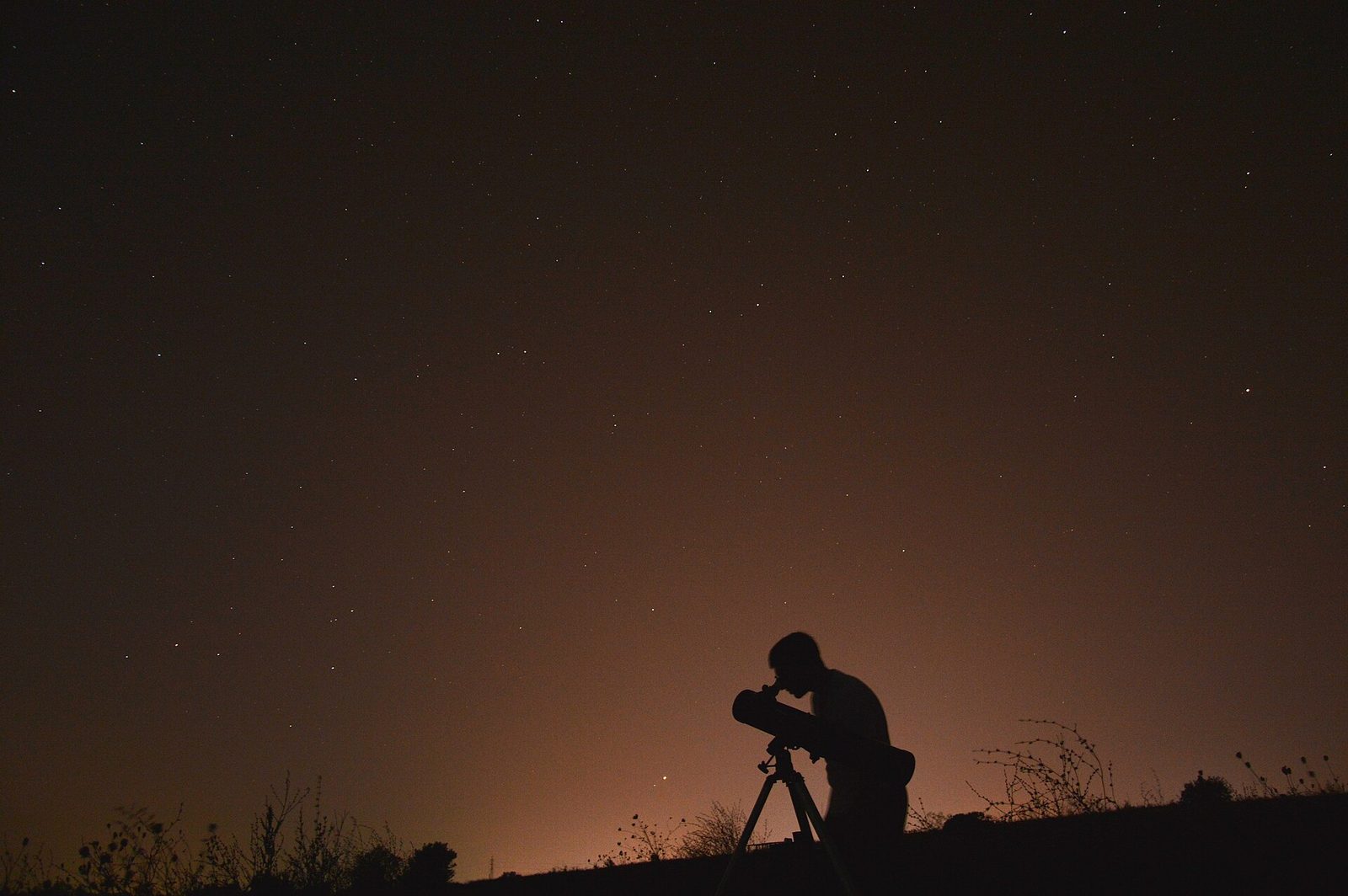
Stargazing is the oldest science there is, and the only equipment it ever needed was a pair of eyes and a dark night. You still need nothing else to begin. A telescope helps later, and you can borrow a look through one for a few pounds or dollars, or for nothing, before you think of buying.
It also has no fixed level. The same hobby covers ten minutes on a doorstep and a night on a hillside with a camera. You choose.
Why it is easier than it looks
Your eyes do most of the work, if you give them time. Royal Museums Greenwich suggests at least 15 minutes in the dark before you judge what you can see; the British Astronomical Association says 15 to 20 minutes or more. One glance at a bright screen undoes it, and you start again.
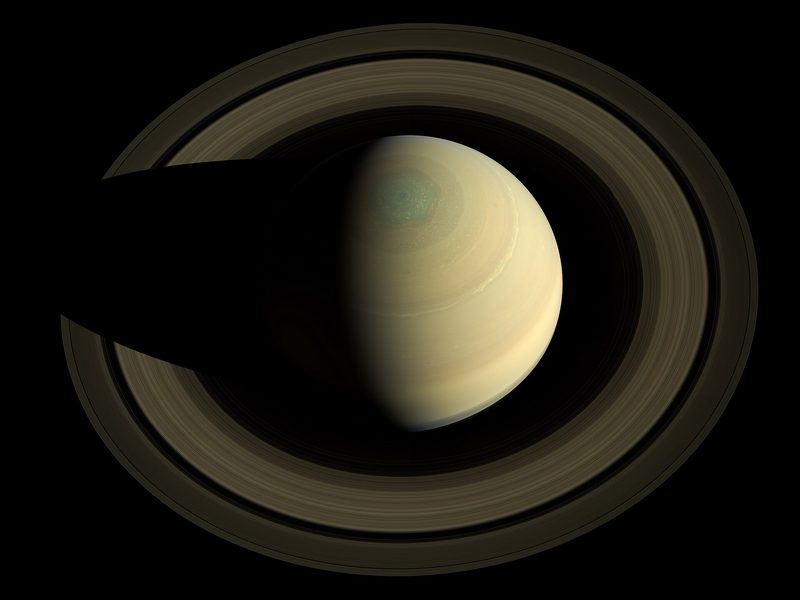
The planets are easy. Venus, Mars, Jupiter and Saturn are all visible to the naked eye, Greenwich says, and they give themselves away because they do not twinkle. Saturn is a good first target this month: it was at opposition on 4 October, BBC Sky at Night Magazine reports, which means it is up all night.
Meteors need no kit at all. A telescope or binoculars get in the way, because meteors cross a wide stretch of sky. Greenwich gives typical peak rates of about 150 an hour for the Geminids in December and up to 110 for the Quadrantids in January.
Apps and charts do the naming. A planisphere (a rotating star chart) or a sky app tells you what you are looking at. If you use an app, switch on its red filter.
The honest challenges
Cloud. You will plan evenings that come to nothing. Check a cloud forecast, and treat a clear night as something to drop other plans for.
Cold. Even on a summer night, sitting still gets cold. The Canadian Space Agency advises dressing warmly, bringing blankets and a hot drink, and using a reclining chair, which shows more of the sky than lying on the ground.
Light. Street lights hide faint stars and meteors. Go somewhere away from buildings if you can, and pick nights near the new moon, when the sky is darkest, unless the Moon itself is what you want to see.
Patience. Faint things are faint. Greenwich suggests looking slightly to one side of a faint object rather than straight at it, because the edge of your eye is more sensitive in the dark. Even under dark skies the Milky Way is a pale grey band, not the colours in photographs.
The good part
The first time you see Saturn’s rings through a telescope, the light reaching your eye left the planet more than an hour earlier, and it has come about 1.3 billion kilometres (800 million miles) to get to you.
There is a little evidence for what that feeling does. In a study led from the University of California, San Francisco, 52 volunteers walked for 15 minutes at least once a week for eight weeks; half were asked to look out for things that gave them a sense of awe. That half reported more compassion and gratitude; the others, who walked more often, did not. It was small, and the effects were moderate, but the night sky is the easiest awe there is.
It can also be useful. Amateurs with patience and their own telescopes still contribute to science: read how Trevor Barry helped describe a new shape on Saturn from his back garden in Broken Hill.
What to bring
- A red torch. White light ruins your night vision. The Canadian Space Agency suggests red cellophane or a red balloon over an ordinary torch; the BAA warns that bright red bicycle lights are too strong.
- A chart or an app, with its red filter on.
- Warm layers, a hat and a hot drink, and something to sit or lie back on.
- Binoculars if you have them. A wide field of view suits the sky. There is no need to buy any to begin.
- A notebook. Date, time, what you saw, how clear it was. In a year it becomes a record.
How to start this month
- Tonight: go outside, turn away from any lights, wait 15 minutes, and find Saturn with your app. From the UK and US it rises in the east at dusk and is due south around midnight.
- This week: learn one constellation well enough to find it without help.
- This month: go to a public observing evening at an observatory or an astronomy society, and ask to see Saturn. The box below lists some near you. Clubs are open to the public and many run beginners’ sessions, the Canadian Space Agency says; our activity page on astronomy societies has the UK and US club finders.
- Next new moon: if you can travel, spend a night at a certified Dark Sky Place. Our list has the finder.
Remote dark places need the usual care: tell someone where you are going, carry a torch and warm clothing, and check the roads and weather first.
Sources
- Want to get into astronomy without buying a telescope or binoculars? — Royal Museums Greenwich, accessed 14 October 2026
- Hints and tips for visual observing — British Astronomical Association, accessed 14 October 2026
- Getting started in astronomy — Canadian Space Agency, accessed 14 October 2026
- Saturn at opposition, October 2026 — BBC Sky at Night Magazine, 1 October 2026
- 'Awe walks' boost emotional well-being — University of California, San Francisco, 21 September 2020
- Evening with the Stars — Royal Museums Greenwich, accessed 14 October 2026
- Daily programs — Griffith Observatory, accessed 14 October 2026
- Public events: Observatory Nights — Center for Astrophysics, Harvard & Smithsonian, accessed 14 October 2026
- RASC Centres — Royal Astronomical Society of Canada, accessed 14 October 2026
Quotes are taken from the sources above. We link to the original reporting so you can read the full story.
Was this one for you?