Ride for a blood bike charity
A friend has invited you to do this with them.
Blood bike volunteers deliver blood, samples, donor milk and medicines for the NHS as a free service, and many groups run around the clock, every day of the year. More than 30 independent blood bike charities do this, and non-riders can join as controllers or fundraisers.
ModerateUnder £100 / $130MonthsOutdoorsOn your ownUK
Christmas present ideas for someone who wants to ride for a blood bike charity
Presents that help someone get started, drawn from this page. They are ideas, not recommendations: we have not tested any of the products, so check sizes and details before you buy.
Kit to give
- Motorcycle phone mountAmazon for receiving job details and navigating between hospitals
- Hi-vis motorcycle vestAmazon for being seen on night shifts
Or give your company
Some of the best presents cost little: offer to go along the first time. Print a promise card to put under the tree.
Some of these are affiliate links: if you buy or book through them we may earn a commission at no extra cost to you. Amazon links are searches, so compare what comes up.
More Christmas gift ideas for people who love doing things Stocking fillers
What riders and controllers do
IAM RoadSmart describes blood bikes as volunteer-led charities delivering urgent medical supplies for the NHS and other healthcare providers, by motorcycle and sometimes by car. Loads include blood, plasma and samples, medicines, donor milk, surgical instruments and equipment, and documents and records. Many groups run 24 hours a day, every day of the year. It counts more than 30 independent blood bike charities.
A controller takes the calls from hospitals at home and sends riders out. At Freewheelers EVS the central number is diverted to the controller's phone and they manage the riders on shift, including their welfare. Controllers need confidence on the phone, a computer and reliable internet, and training is given.
Each group sets its own rider rules, and they differ. IAM RoadSmart says most ask riders to be over 21 or 25, to hold a full, unrestricted motorcycle licence and to complete an advanced riding course, and that all NABB member groups need an advanced qualification.
| Role at Freewheelers EVS | Requirements (as last listed) | Time asked (as last listed) |
|---|---|---|
| Rider | 25 or over for insurance; full unrestricted licence held two years; experience on bikes over 600cc; IAM or RoSPA advanced pass, renewed every three years at your own cost; no more than 6 points; standard DBS check; smartphone with data | Typically 2 or 3 shifts a quarter; two fundraising events before riding, then at least two a year |
| Controller (coordinator) | 18 or over; works from home with a computer and reliable internet; standard DBS check | Shifts follow the riders' pattern, in weeknight or weekend blocks |
| Fundraiser | 18 or over; standard DBS check | Not stated |
Before you ride
Freewheelers provides the bikes, a liveried fleet fitted with GPS trackers, so riders do not need their own. Every new rider has an induction with a riding assessment, even with a recent advanced pass, plus training in handling items classed as hazardous, the charity's rules and possibly a live shift on your own bike to learn the area. Everyone consents to a standard DBS (Disclosure and Barring Service) check, and riders do a full check of the bike before first use and further checks before each use.
Rider places can have waiting lists. Freewheelers keeps a waiting list for each patch, and suggests joining as a controller or fundraiser in the meantime.
How to start
- Find the blood bike group for your area; Freewheelers points people outside its area to the Nationwide Association of Blood Bikes (NABB). Read the group's rider rules, which vary.
- Check your licence history, penalty points and age against the group's insurance rules, and book an IAM or RoSPA advanced riding test if needed.
- Contact the group; Freewheelers keeps waiting lists for rider places and suggests joining as a controller or fundraiser in the meantime.
Where to go
We opened these links on 20 November 2026 and found them to be what we say. Dates, places and prices are on the official page, where they stay up to date.
Plan this
Two ways to plan it.
Plan it yourself Free
The links you need to book it, get there, find somewhere to stay and eat, and see what else there is to do nearby. They are searches for you to run; nothing is saved.
Show the links
Plan it with dates
Pick a day, or a month, and we will set out how to get ready, step by step, with a date and a reason for each. A habit needs a fixed slot in the week more than a plan, so the planner gives it one and checks in gently.
Questions people ask
Do you need an advanced riding qualification to be a blood biker?
Usually. IAM RoadSmart says all NABB member groups require one, and some groups may let you join while you work towards the test. Freewheelers asks for an IAM or RoSPA pass, renewed every three years.
How old do you have to be to ride for blood bikes?
It depends on the group's insurance. Freewheelers requires riders to be 25 or over, and IAM RoadSmart says most groups ask for over 21 or 25.
Do blood bike riders use their own motorbikes?
Not at Freewheelers, which provides a liveried fleet. Rules differ between groups, so check with yours.
Can you volunteer for blood bikes without riding?
Yes. Groups such as Freewheelers need controllers who take hospital calls from home and fundraisers, and IAM RoadSmart says some groups also use cars.
Where this comes from: IAM RoadSmart, Blood bikes; Freewheelers EVS, Are you interested in volunteering?. Opened 20 November 2026.
Read next
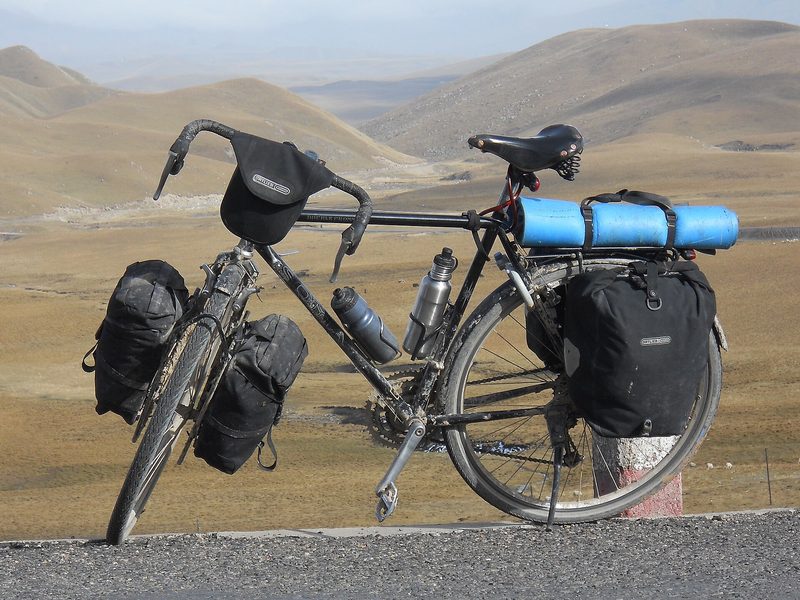
Bangkok to Bangkok the long way: Mark Herbst's 30,000 km ride for Jackie
How Mark Herbst, a cycling coach from Ontario, rode 30,000 km around the world in 324 days in memory of his wife, raised money for cancer research and took a Guinness World Record; and how to build towards a cycle tour of your own, from a first overnight trip to a fortnight on the road.
Swimming and cycling: the joint-friendly way back to fitness
Why swimming and cycling are the low-impact options health bodies recommend, how to learn or relearn as an adult in the UK and US, what an e-bike does and does not do, and how to build up to the 150-minute guideline without hurting yourself.
More like this
Moderate
Take an advanced driving course
Moderate
Take your first motorcycle training course
Gentle
Give blood
Gentle
Volunteer with the NHS