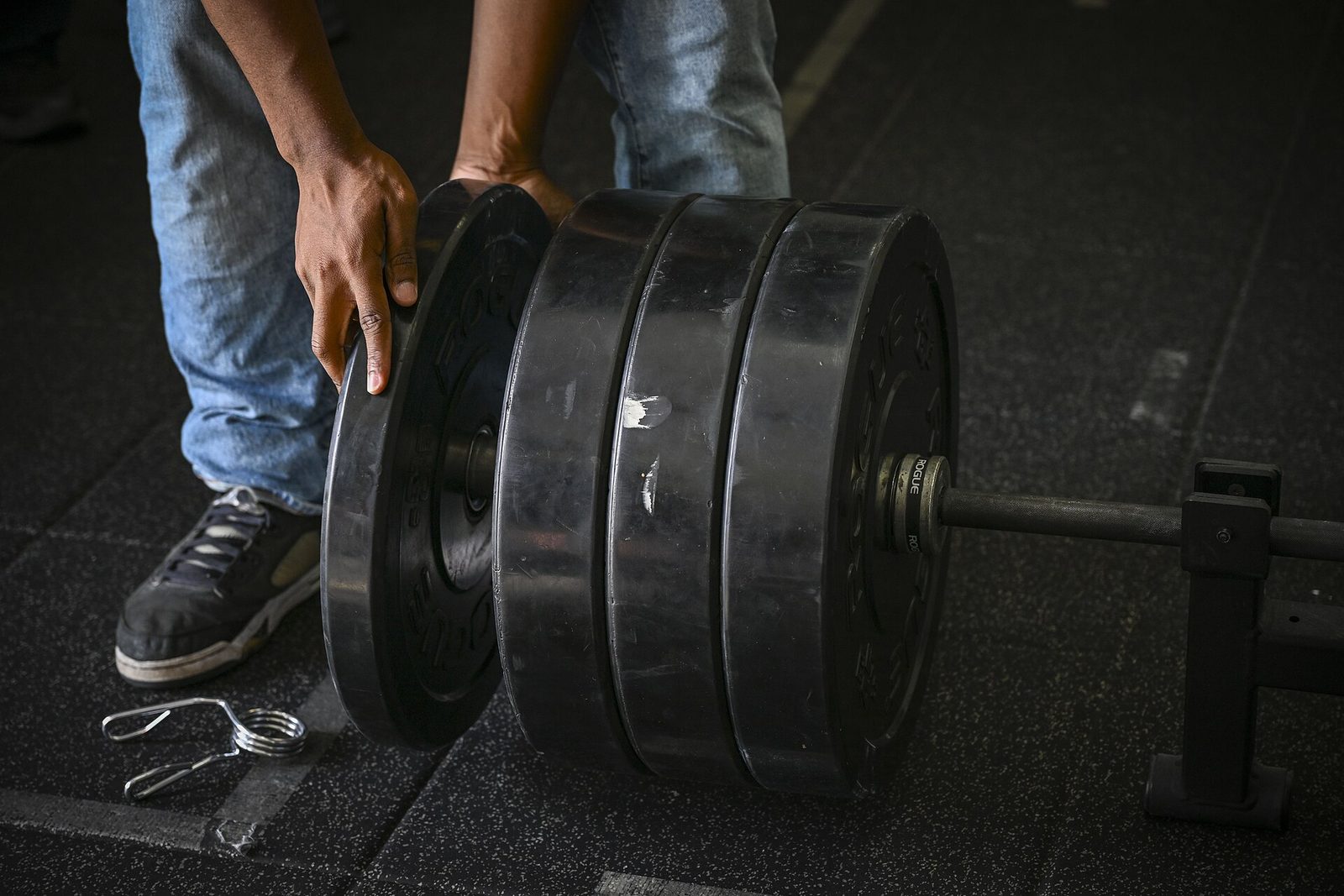
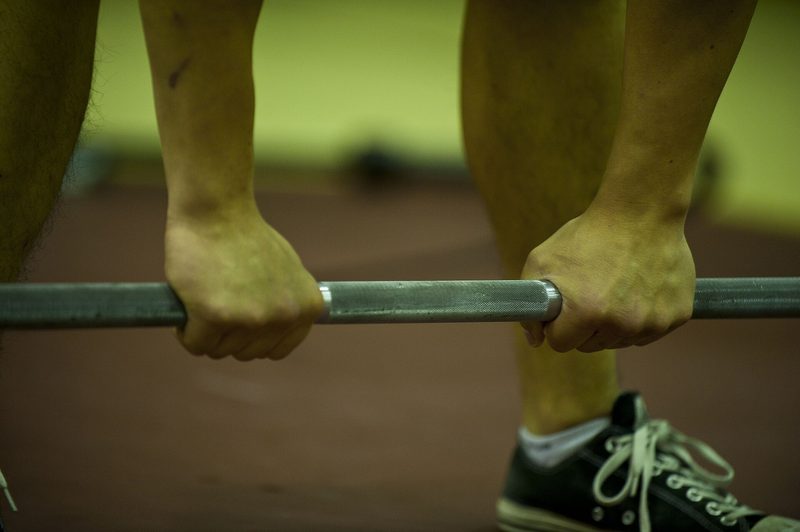
Plates going on the bar at a powerlifting competition. Photo: U.S. Air Force photo by Senior Airman Haiden Morris, public domain, via Wikimedia Commons.
Ravi Sood, from Canberra, was in his seventies and facing a double knee replacement when his surgeon gave him a piece of advice that most patients would file under “get through it”. Sood filed it under “get ready”.
“Both my knees needed replacing, and the orthopaedic surgeon said that if I had my muscles in good condition, the surgery would be easier.”
— Ravi Sood, ABC News
Watch. “The 82-year-old headed to the powerlifting world championships | ABC NEWS”, from ABC News (Australia). It plays here from YouTube; the film is theirs, not ours.
So, at 70, he started weightlifting. Twelve years later, at 82, he holds the Australian deadlift record for his age and weight class — 115 kilograms — and was selected to represent Australia at the World Masters Powerlifting Championships in South Africa.
“This is my dream come true. Just the fact that I’m wearing Australian green and gold, for me, that’s fantastic.”
“Prehab” is real, and under-used
Surgeons and physiotherapists have known for years that patients who go into joint surgery stronger come out of it faster. The idea has a name — prehabilitation — and it is one of the best-evidenced reasons for an older adult to start strength training. Stronger quadriceps and glutes mean a quicker return to walking, fewer complications and less time in rehab afterwards.
What Sood’s story shows is what happens if you don’t stop once the surgery is done. The habit that was meant to be a means to an end became the end itself.
A note on motivation
Sood is not chasing medals.
Medals, he told ABC News, matter less to him than representing his country at international level.
Notice the pattern across this week’s stories. Martine Barons talks about lifting grandchildren, not trophies. Betty Brussel talks about being with people. Sood talks about wearing the green and gold. None of them is motivated by the number on the bar. The number is a by-product of turning up.
Why deadlifting suits older bodies
The deadlift — picking a weight up off the floor with a straight back and standing up — is the most functional lift there is. It is literally the movement of lifting a grandchild, a shopping bag or a suitcase. Done with good coaching and sensible loads:
it strengthens the back, hips and legs together
it improves grip strength, one of the best predictors of healthy ageing
it loads the bones, which matters enormously for osteoporosis risk
it is straightforward to progress: add a little weight, or a rep, each week
Sood started at 70 with a surgeon’s suggestion and a pair of knees that needed replacing. If that is not permission to start, we are not sure what would be.
Martine Barons took up deadlifting during the UK lockdown at 62. Three years later she has three AWPC world titles and says her body feels twenty years younger.
The complete starting guide to getting active. Covers the four types of activity, what the UK, WHO and US guidelines recommend, starting from nothing, safety, choosing an activity and staying consistent.
A plain explanation of sarcopenia (age-related muscle loss), the six movements that cover the whole body, beginner sets and reps, bodyweight versus bands versus dumbbells, and how to progress safely at home.
28 September 2026, 5 min read
The Second Start — our free email list
Our email is starting soon: one real story and one thing to try. Join now to get the first one. Free: the 7-Day Restart Plan (PDF) when you join.
We use cookies for ads and to see which stories help most. Details.