Curious · 7 November 2026 · 4 min read
Five seconds slow after two months at sea: how John Harrison's H4 found longitude
Sailors in the 1700s could tell how far north they were, but not how far east or west. A carpenter from Lincolnshire spent most of his life building clocks that could, and then years more arguing about whether he had done it.
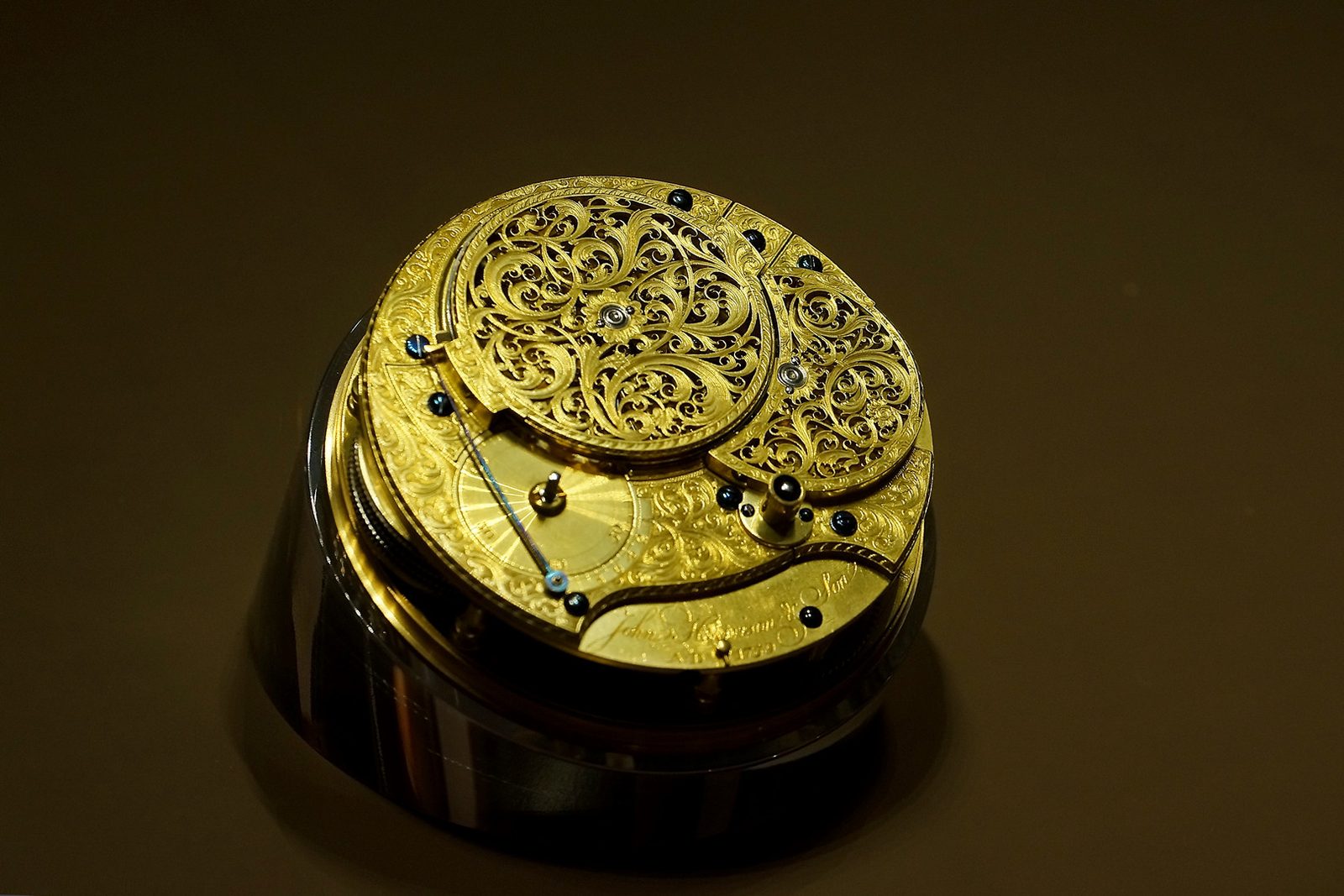
In May 1736 a new kind of clock went to sea for the first time, aboard HMS Centurion to Lisbon and back on the Orford. As the coast of England came into view on the return, its maker, John Harrison, said the headland ahead was the Lizard, not Start Point. Royal Museums Greenwich says that put the ship about 60 miles off course.
The clock was H1. It would take Harrison almost three more decades, and a watch, to finish the job.
The problem with east and west
By 1700, Royal Museums Greenwich says, skilled seamen could find their position north or south. Latitude comes from the height of the sun or the Pole Star. Longitude, how far east or west, was the hard part. The problem drew in Galileo and Isaac Newton and led to the founding of the Royal Observatory.
The answer, in principle, was time. The Earth turns 15 degrees an hour, so if a ship carries the exact time of its home port and compares it with local noon, the difference gives its longitude. The catch was a clock that kept time on a rolling ship through heat, cold and damp.
In 1714 Parliament offered a reward. The Linda Hall Library, the science library in Kansas City, gives the top figure as £20,000 for a method accurate to 30 nautical miles.
A carpenter’s clocks
Harrison was born on 24 March 1693. Royal Museums Greenwich describes him as a carpenter by trade who taught himself clockmaking, and says that by the mid-1720s his longcase clocks kept time to about a second a month. A sea clock would need to stay within about three seconds a day.
He built H1 at Barrow upon Humber in Lincolnshire, probably with his brother James. Its two linked balances made it, in the museum’s words, “unaffected by the motion of a ship”. After the Lisbon trial, eight Commissioners met in June 1737 and agreed £500, with £250 paid at once, for a better clock within two years.
H2 was finished in time but never sent to sea, because Harrison had found a fundamental flaw in it. H3, begun in 1740, occupied him for 19 years. Meanwhile, around 1751 to 1752, he had the watchmaker John Jefferys make a watch with a new kind of balance. That idea became H4, which ticks five times a second. Where H1 to H3 were large machines, the Linda Hall Library notes, H4 is a watch, if a big one.
Two voyages
In 1761 the Commissioners let Harrison’s son William take H4 to Jamaica. The Linda Hall Library says that when the ship arrived, about two months later, H4 was only five seconds slow, an error in longitude of about two miles. Royal Museums Greenwich adds that William predicted an earlier landfall at Madeira, and the captain asked to buy the next timekeeper.
The Commissioners were not satisfied. Royal Museums Greenwich says they judged the test insufficient; the Linda Hall Library says they called the result a fluke. A second trial followed. The astronomer Nevil Maskelyne sailed for Barbados in September 1763, and H4 followed in March 1764. The Linda Hall Library gives its error as 10 miles.
In February 1765 the Board agreed that H4 had kept time within the strictest limits of the 1714 Act, but attached conditions: £10,000 once Harrison explained how it worked, and the rest only when other makers had built timekeepers like it. The Harrisons thought the full reward was already due. A new Act of 10 May 1765 made the conditions law.
Cheated, or careful?
The popular version says the Board cheated a working man out of his prize. The two sources tell a less tidy story.
- H4 at the Observatory. Maskelyne tested H4 at Greenwich for 10 months from May 1766. Royal Museums Greenwich says it did not perform well there, and that Harrison disputed the results.
- The money. The Linda Hall Library says Harrison received £10,000 on top of £4,315 already advanced, and that after an appeal to King George III, Parliament paid a final £8,750 in 1773. Royal Museums Greenwich gives no sum, saying only that he got generous compensation but not all he felt he was owed.
- The prize itself. According to the Linda Hall Library, the official prize was never awarded to anyone.
- The portrait. The famous portrait of Harrison with a watch shows, the Linda Hall Library says, a smaller watch than H4, with H3 behind him.
Harrison died on his 83rd birthday, 24 March 1776. Chronometers stayed costly at first, and Royal Museums Greenwich says simpler designs by later makers brought wider use only in the early 1800s.
Seeing the clocks
Royal Museums Greenwich calls H4 “the most important timekeeper ever made”. Its pages say the original H2, H3 and H4 and a replica of H1 are shown in the Time and Longitude gallery at the Royal Observatory, with the original H1 away for conservation. The Observatory itself is now closed for refurbishment; Time Out reported in September that it would reopen in summer 2027.
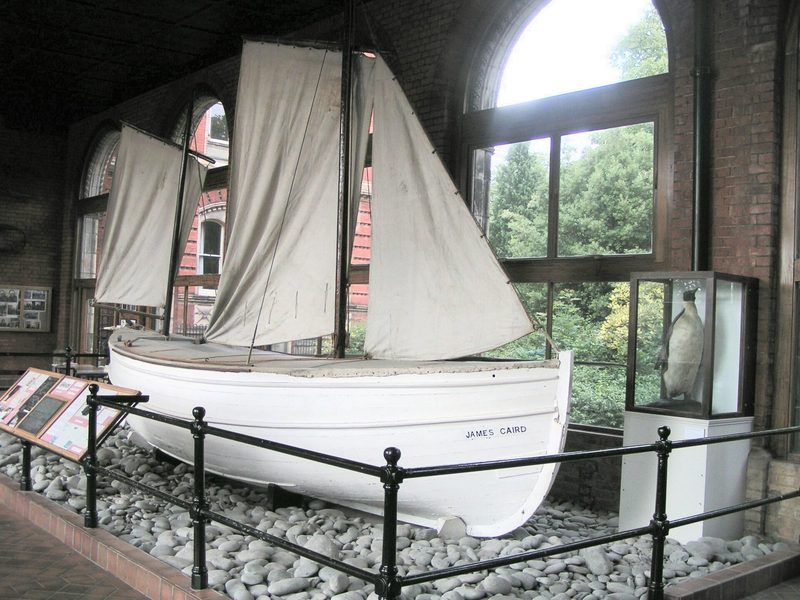
For a voyage where finding your place at sea was a matter of life and death, read how Frank Worsley steered the James Caird to South Georgia.
Sources
- Longitude found: the story of Harrison's timekeepers — Royal Museums Greenwich, accessed 7 November 2026
- Scientist of the Day: John Harrison, British Clockmaker — Linda Hall Library (William B. Ashworth Jr), 24 March 2017
- Time and Longitude gallery — Royal Museums Greenwich, accessed 7 November 2026
- What's happening at the Royal Observatory? — Royal Museums Greenwich, accessed 7 November 2026
- Royal Greenwich Observatory will soon close for a £77 million makeover — Time Out London, 9 September 2026
Quotes are taken from the sources above. We link to the original reporting so you can read the full story.
Was this one for you?