Curious · 5 November 2026 · 4 min read
Kevlar began as a cloudy liquid that Stephanie Kwolek's lab was wary of spinning
In the mid-1960s a DuPont chemist in Wilmington, Delaware, was looking for a light, strong fibre for car tyres. She made a cloudy solution that colleagues doubted, persuaded them to spin it, and found a fibre that DuPont would sell as Kevlar.
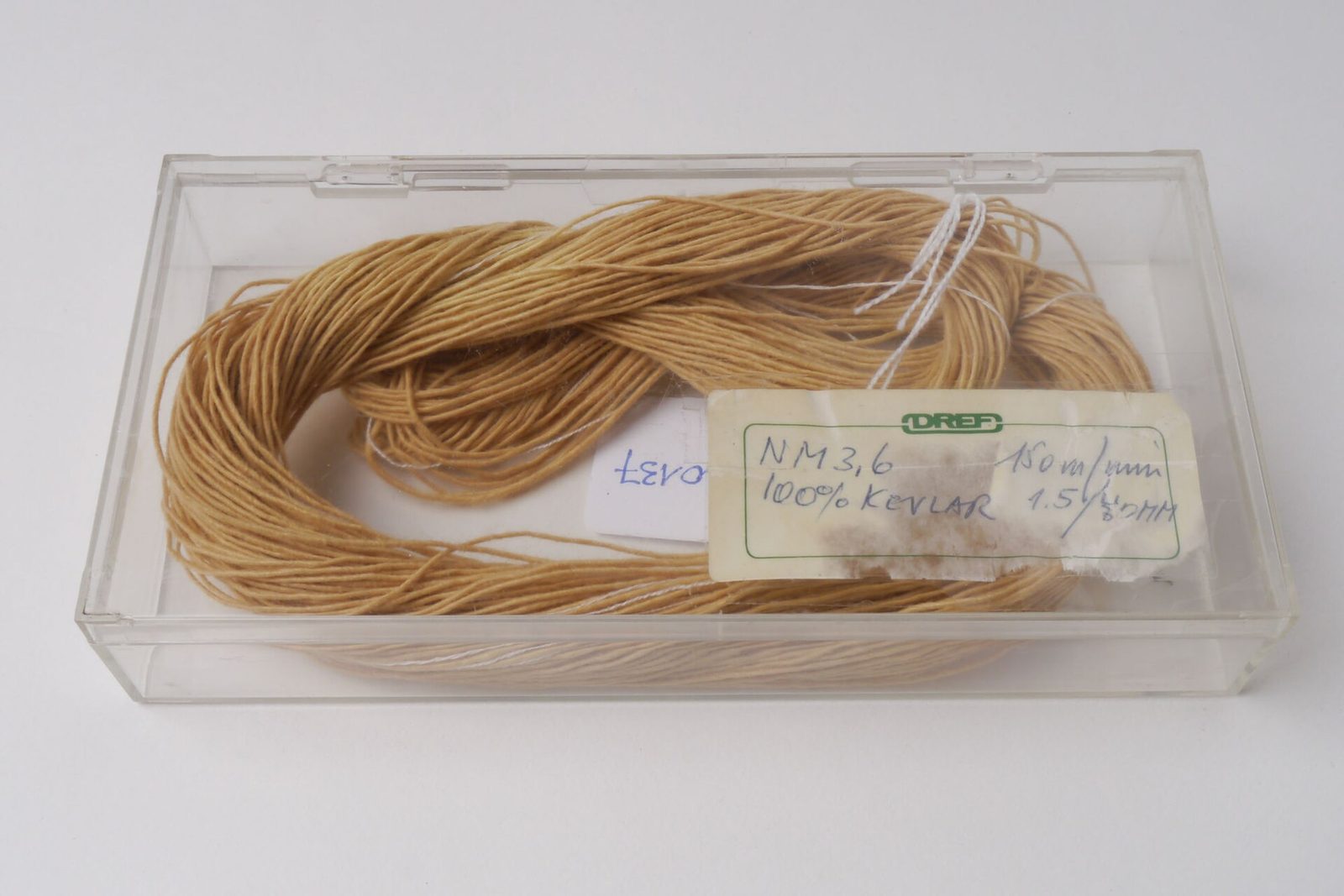
The liquid did not look promising. It was thin and cloudy, and several of Stephanie Kwolek’s colleagues doubted it. In the mid-1960s, at DuPont’s Pioneering Research Laboratory in Wilmington, Delaware, that cloudy batch was the start of a fibre that the National Inventors Hall of Fame describes as five times stronger than the same weight of steel. DuPont called it Kevlar.
A chemist who meant to be a doctor
Kwolek was born on 31 July 1923 in New Kensington, Pennsylvania, a small town outside Pittsburgh. She entered college in 1942, chose a science-heavy course, and graduated in chemistry in 1946 from Margaret Morrison, the women’s college of the Carnegie Institute of Technology (now Carnegie Mellon University).
She had hoped to study medicine. The Lemelson-MIT Program says she could not afford medical school at the time, so she took a job as a chemist instead. The Science History Institute gives two reasons she chose DuPont: she was interested in the work that had produced nylon, and the company offered men and women equal starting salaries. She started in its Textile Fibers Department in Buffalo, New York, in 1946, and moved with the Pioneering Research Laboratory to Wilmington in 1950.
“We had to learn a lot of chemistry in a hurry on the job,” she said, in words the Science History Institute quotes.
The tyre problem
By the mid-1960s DuPont was looking for a new generation of light fibres of unusual strength. The Lemelson-MIT Program says that in 1964 Kwolek was given a specific task: a high-performance fibre for car tyres, to cut fuel use.
She was working with polymers whose molecules are stiff and shaped like rods. From two of these aromatic polymers she made the fluid, cloudy liquid that, in the Lemelson-MIT Program’s words, “seemed dubious to many”.
Persuading the lab to spin it
To find out what a solution would make, it had to be spun: pushed through a spinneret, a metal plate with tiny holes, to draw it out as fibre. The Lemelson-MIT Program says her request was turned down at first, for fear that the cloudy liquid would damage the spinneret. She kept asking. When it was finally spun, the fibres it made had their molecules lined up in parallel, the mark of a very stiff, strong fibre.
The Science History Institute explains what she had found. Under the right conditions, large numbers of these rod-like molecules line up side by side, forming a liquid crystal solution that can be spun straight into fibre. The runniness that had worried everyone turned out not to matter: the solutions, the Institute says, “spun beautifully”.
Where the accounts differ
The three short biographies we used agree on the shape of the story but not on every detail.
- The year. The Lemelson-MIT Program dates the tyre task to 1964. The Science History Institute puts the cloudy liquid in 1965 and the wider search in the “mid-1960s”. The Hall of Fame gives no year for the discovery.
- Stronger than steel. The Science History Institute says five times stronger than steel. The Hall of Fame adds the important words “the same weight of”. Those words matter: the claim is about strength for a given weight, which is what counts in a vest or an aircraft part.
- Who made it. Retellings often credit Kwolek alone. The Science History Institute says she discovered the liquid crystal solutions and then worked with colleagues on the process, and names Herbert Blades, Paul W. Morgan and Joseph L. Rivers Jr. among the people on the Kevlar work. Popular versions also add colourful details, such as the technician’s name, that none of these three sources gives.
- Patents. The Lemelson-MIT Program says she retired from DuPont in 1986 with 17 US patents. The Hall of Fame lists two for this work.
What it became
The fibre went far beyond tyres. The Science History Institute counts some 200 uses, including protective vests, boats, aircraft, ropes, cables and bicycle tyres; the Hall of Fame adds mooring ropes, fibre-optic cables and canoes. Body armour made it famous: the Lemelson-MIT Program calls it the life-saving material of bulletproof vests.
Kwolek was inducted into the National Inventors Hall of Fame in 1995, received the National Medal of Technology in 1996 and the Perkin Medal in 1997. “I recommend that parents encourage their daughters to pursue scientific careers, if they are so inclined, in the same way they would their sons,” she told the Lemelson-MIT Program. She died on 18 June 2014.
For another invention that started with something odd happening in a lab, read the slower truth about Percy Spencer and the microwave oven.
Sources
- Stephanie L. Kwolek — Science History Institute, updated 30 March 2026
- Stephanie Kwolek — Lemelson-MIT Program, accessed 5 November 2026
- Stephanie Louise Kwolek — National Inventors Hall of Fame, accessed 5 November 2026
Quotes are taken from the sources above. We link to the original reporting so you can read the full story.
Was this one for you?