Curious · 3 November 2026 · 3 min read
A name in charcoal, dated 1902, was waiting on the wall when Hiram Bingham reached Machu Picchu
On 24 July 1911 a Yale lecturer, Hiram Bingham, climbed to the ruins of Machu Picchu above Peru's Urubamba valley. The world remembers it as a discovery. Peru's own archaeologists tell a fuller story: a local guide, families farming the terraces, a name in charcoal from 1902, and a site that may not even have been called Machu Picchu.
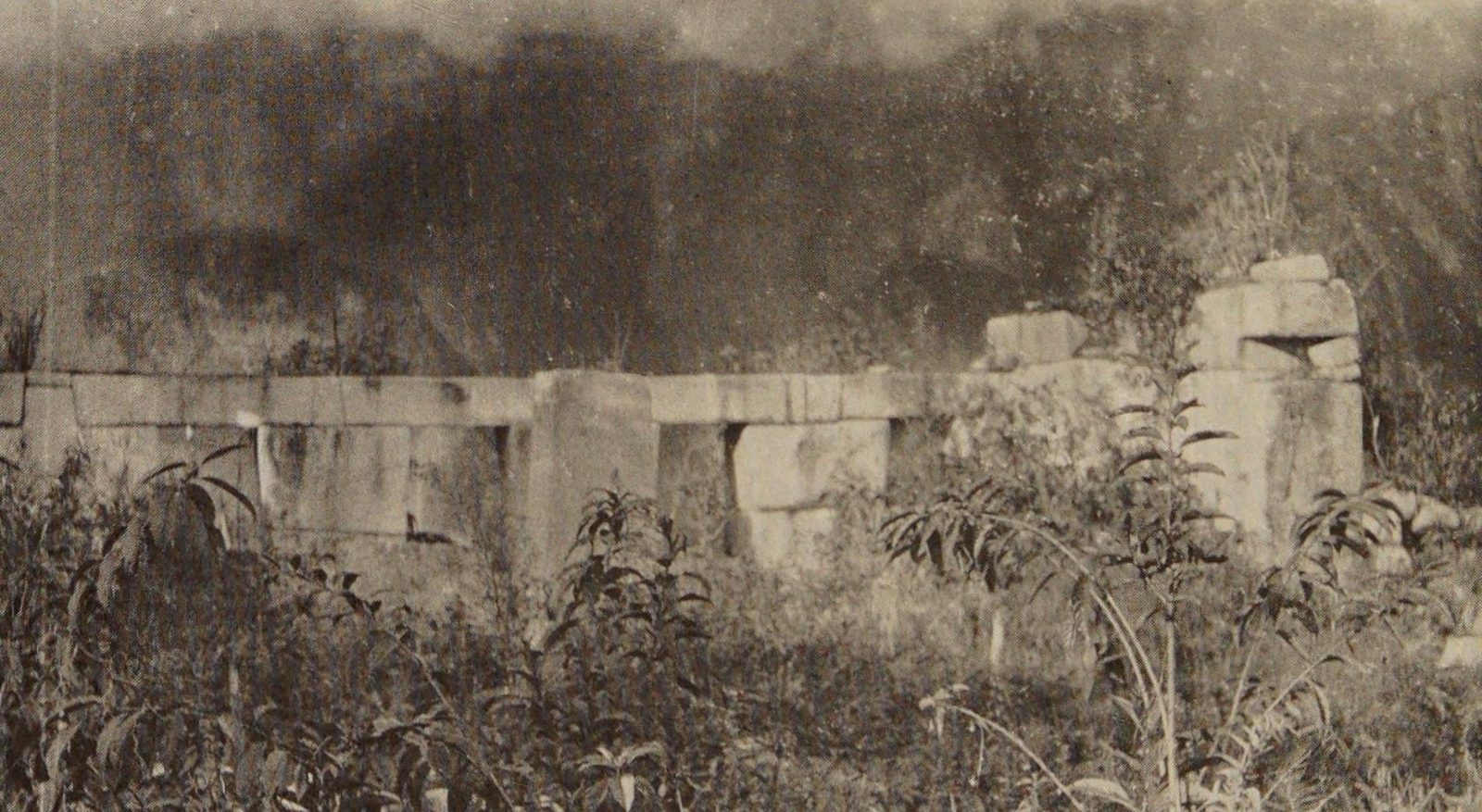
On 24 July 1911, Hiram Bingham, a history lecturer at Yale, climbed a steep ridge above the Urubamba river in southern Peru. With him were Melchor Arteaga, a Quechua-speaking local resident, and Fabián Carrasco, a sergeant of Peru’s Guardia Civil. At the top were stone terraces, walls and temples.
Bingham stayed no more than three hours, according to a history of the Yale expeditions published by Peru’s Ministry of Culture. He was not even looking for this place. He was searching for two other Inca sites, Vitcos and Vilcabamba.
Who was already there
The ruins were not empty. The ministry’s account, by the archaeologist José M. Bastante, describes two local farming families, Álvarez and Richarte, working some of the old terraces. One of Bingham’s first photographs shows a boy it names as “el niño Richarte”.
Many retellings say a young boy led Bingham up to the ruins. Bastante’s chapter names Arteaga as the guide and does not describe the boy as one. Encyclopaedia Britannica also credits Arteaga.
Then there was the wall. In the central window of the Temple of the Three Windows, Bingham found a name and a date written in charcoal: “Lizárraga 1902”. Agustín Lizárraga, a local man, had reached the ruins nine years earlier. Bingham’s own 1911 photograph shows the inscription, Bastante writes. The following year Bingham ordered all such graffiti cleaned off, though he did mention Lizárraga in his publications. Lizárraga drowned in February 1912 and never saw the fame that followed.
Others may have come earlier still. Britannica notes that some scholars believe a German adventurer, Augusto Berns, visited in 1867.
UNESCO’s World Heritage entry is careful with its wording. It says that it was not until 1911 that the complex “was made known to the outside world”. That is a fair description of what Bingham did, and it is not the same as finding it.
What Bingham thought he had
The site itself is extraordinary by any measure. UNESCO describes about 200 structures built in the fifteenth century on a ridge 2,430 m (about 7,970 ft) above sea level, laced with stone terraces, with farming and living areas divided by a large square. It was abandoned when the Spanish conquered the Inca Empire in the sixteenth century.
Bingham became convinced it was Vilcabamba, the place he had been looking for, Britannica says. That claim was not seriously disputed until the middle of the twentieth century, and excavations in 1964 showed Espíritu Pampa to be a more likely site. Bingham, meanwhile, had gone into politics: he became governor of Connecticut and then a United States senator.
The 1912 dig and the long road home
Bingham came back in 1912 with a larger Yale team. From July to November, workers burned and cleared the vegetation and dug, mostly no deeper than about 60 cm (2 ft). The digging was done by local men, and Bastante’s chapter lists their names. The team recovered pottery, textiles, bones, tools and roughly 200 metal objects, which went to Yale.
Under an agreement signed with Yale in November 2010, most of the objects excavated in 1912 were returned, and they are now in the Museo Machupicchu in the Casa Concha in Cusco.
Was it even called Machu Picchu?
Perhaps not. In 2022 the historian Donato Amado Gonzales, of Peru’s Ministry of Culture, and the archaeologist Brian Bauer, of the University of Illinois Chicago, published a study in the journal Ñawpa Pacha. Working from Bingham’s own field notes, nineteenth-century maps and colonial records, they concluded that the Inca town was originally called Picchu, or more likely Huayna Picchu, after the rocky peak closest to it.
A Spanish record from 1588 describes local people thinking of returning to the town they called Huayna Picchu, according to The Past. NPR reported that Bingham was first told the ruins were called Huayna Picchu, and that a different guide said Machu Picchu a few days later. The second name stuck.
Nobody plans to change it. “It may not have been Machu Picchu to the Incas but now it’s Machu Picchu to the world,” Amado Gonzales told NPR.
Why it is worth knowing
The best part of this story is not the famous moment but the people at its edges: the guide, the farming families, the man with a stick of charcoal, the workers on the 1912 dig. Discoveries are often the point at which a place already known to its neighbours becomes known to everyone else. It is worth asking, of any famous find, who was there first.
Sources
- Historic Sanctuary of Machu Picchu — UNESCO World Heritage Centre, accessed 3 November 2026
- Los trabajos de las Expediciones Peruanas de Yale en la llaqta de Machupicchu (José M. Bastante), in Machupicchu: Investigaciones Interdisciplinarias, Tomo I — Dirección Desconcentrada de Cultura de Cusco, Ministry of Culture of Peru, September 2020
- Hiram Bingham — Encyclopaedia Britannica, accessed 3 November 2026
- The Ancient Inca Town Named Huayna Picchu (Donato Amado Gonzales and Brian Bauer, Ñawpa Pacha 42(1)) — University of Illinois Chicago, Indigo repository, 2022
- Historians say explorers got it wrong: It's not Machu Picchu, it's Huayna Picchu — NPR, carried by KPCW, 27 March 2022
- Machu Picchu may have been known by another name, study suggests — The Past (Current Publishing), 18 May 2022
Quotes are taken from the sources above. We link to the original reporting so you can read the full story.
Was this one for you?