Explore · 6 October 2026 · 3 min read
The 10,000th bird was an orange-tufted spiderhunter, and Peter Kaestner got there first
Peter Kaestner, 73, a former American diplomat from Maryland, is the first person known to have seen 10,000 species of bird, about nine in ten of all there are. Guinness World Records has now set out how he did it. The method is open to anyone with a notebook.
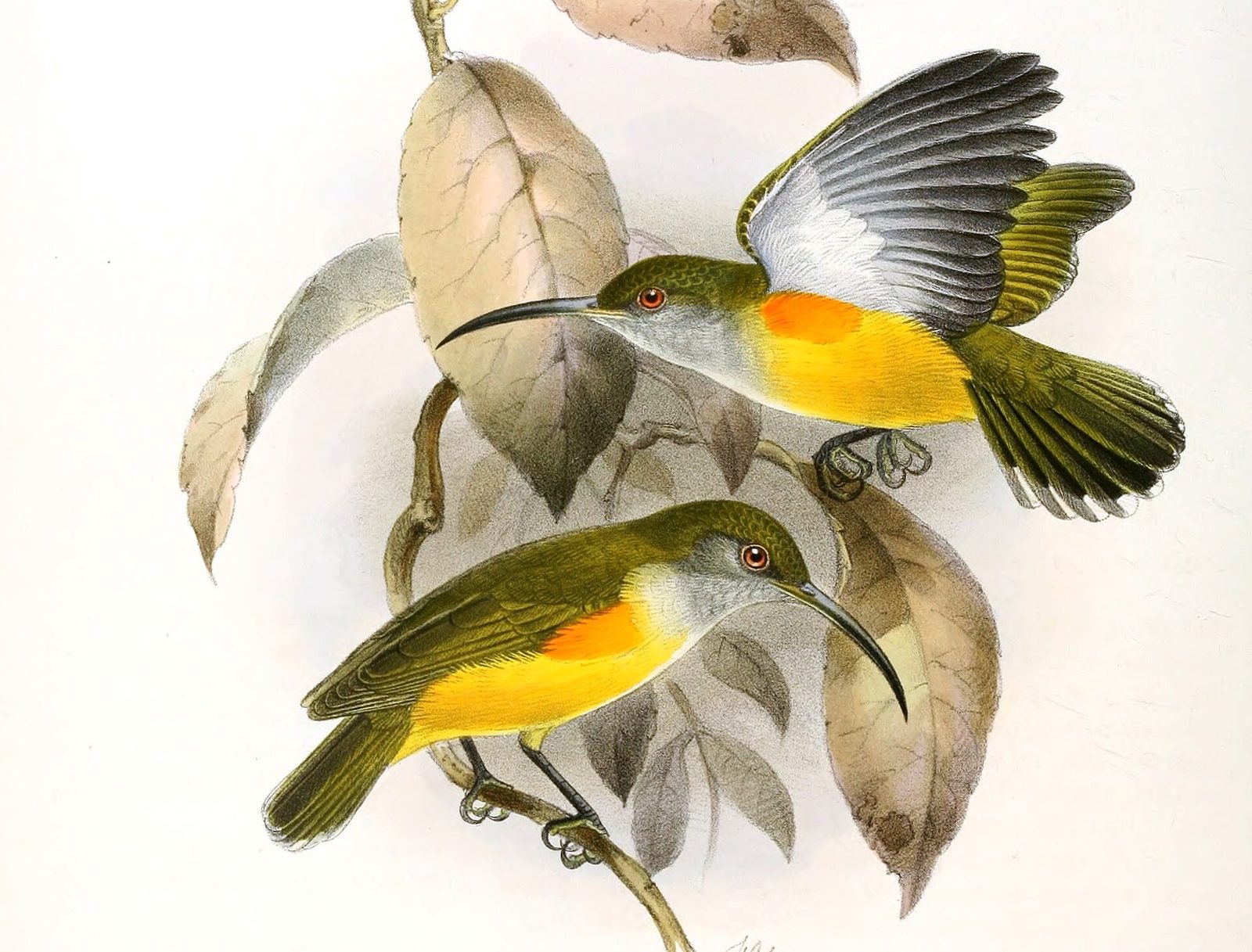
Near Bislig, on the Philippine island of Mindanao, on 9 February 2024, a local guide named Felizardo Goring helped an American visitor find an orange-tufted spiderhunter. For the visitor, it was bird number 10,000.
Peter Kaestner, now 73, a former United States diplomat from Cockeysville, Maryland, had become the first person known to have seen 10,000 species of bird. The list he counts against, the IOC World Bird List, then held 11,194. He has seen roughly nine in every ten.
Guinness World Records, which lists him as the holder of the record for most birds spotted in a lifetime, published a full account of how he did it in June this year.
“For me, birding is a 24/7 thing. I never tire of seeing even common birds.” — Peter Kaestner, to The Baltimore Sun, quoted by Guinness World Records
A career chosen for the birds
It began in Baltimore, where he and his older brother searched their neighbourhood and kept score in their heads or on paper. In 1962, aged nine, he made his first birding trip abroad, to the Bahamas.
He thought about becoming an ornithologist. He chose international relations instead, Guinness reports, because it would let him travel. Peace Corps service in Africa brought his total to about 1,500. In 1980 he joined the US Foreign Service, and over 36 years and a dozen postings, India and Brazil among them, he passed 8,600.
Two moments stand out. In 1986 he became the first person to see a member of every bird family, 159 of them at the time. Three years later, posted to Colombia, he found a bird nobody had described. The Cundinamarca antpitta now carries his name: Grallaria kaestneri. When he went back to its forest recently, local people had set up a feeding station to protect and watch it.
Number 10,000, and a rival
The finish was not tidy. Hours after Kaestner announced his milestone, Explorersweb reported, Jason Mann, an American doctor living in Hong Kong, said he had got there first. Birders went through Mann’s list online and questioned entries including a nightjar recorded only once, in 1939. Mann withdrew.
“I think it best to put my support behind Peter as the first birder to 10,000.” — Jason Mann, quoted by Explorersweb
Kaestner, for his part, told The Guardian in 2024 that recognition was “a treat” but not the reason he does it:
“I love to travel, I love the adventure of going to unusual places, I love observing bird behavior. I love teaching people about birds.” — Peter Kaestner, to The Guardian, quoted by Guinness World Records
Why this matters
Kaestner’s number is out of reach. His method is not. A list gives a walk a purpose, and a purpose gets you out at dawn and up a hill you would have driven past.
There is evidence for what that does. Researchers at King’s College London followed 1,292 people who logged their mood on a phone app 26,856 times between 2018 and 2021. Seeing or hearing birds was linked to better mental wellbeing that lasted up to eight hours, and the effect held for people with a diagnosis of depression. The study, in Scientific Reports, shows a link, not proof of cause.
Kaestner logs his sightings on eBird, the free database run by the Cornell Lab of Ornithology, which takes in more than 100 million sightings a year and makes them available to scientists.
Starting a list, or stretching one
- New to it? You need no kit to begin. Our beginner’s guide to birdwatching covers the free apps, what binoculars are for, and guided walks near you.
- Already out most weekends? Give yourself a boundary. Fifty species in a month within 5 miles (8 km) of home, on foot, is harder and more interesting than it sounds.
- Make it count. A complete eBird checklist, everything you identified and how long you were out, is worth more to researchers than a single rare sighting.
For another amateur who ended up in the scientific record, read about Jeremy Lockwood, the family doctor who named three dinosaurs. For another lifelong project, there is Karl Bushby, walking home from Chile since 1998.
Sources
- Searching for birds: the man who travelled the world to see over 10,000 different species — Guinness World Records, 5 June 2026
- Peter Kaestner becomes first birder to see 10,000 species — BirdGuides, 27 February 2024
- Birding controversy: two birders claim 10,000 species record on the same day — Explorersweb, February 2024
- Peter Kaestner and 10,000 birds — Idaho Press, 2024
- Peter Kaestner (date of birth) — Wikipedia, accessed 6 October 2026
- Feeling chirpy: being around birds is linked to lasting mental health benefits — King's College London, 27 October 2022
- About eBird — Cornell Lab of Ornithology, accessed 6 October 2026
- Big Garden Birdwatch FAQs — RSPB, accessed 6 October 2026
Quotes are taken from the sources above. We link to the original reporting so you can read the full story.
Was this one for you?