Spot the International Space Station passing over
A friend has invited you to do this with them.
The International Space Station circles Earth about every 90 minutes at roughly 17,500 mph (28,000 km/h), and from your garden it shows as a fast-moving point of light. NASA's free Spot the Station app tells you when and where to look.
GentleFreeAn afternoonOutdoorsAlone or with othersUK and US
Christmas present ideas for someone who wants to spot the International Space Station passing over
Presents that help someone get started, drawn from this page. They are ideas, not recommendations: we have not tested any of the products, so check sizes and details before you buy.
Kit to give
- 10x50 binocularsAmazon to look at the Moon and planets while you wait for a pass
- Pocket compassAmazon to face the right direction before the station appears
Or give your company
Some of the best presents cost little: offer to go along the first time. Print a promise card to put under the tree.
Some of these are affiliate links: if you buy or book through them we may earn a commission at no extra cost to you. Amazon links are searches, so compare what comes up.
More Christmas gift ideas for people who love doing things Stocking fillers
Why you can see it
The station shows up because it reflects sunlight, so it is too faint to pick out in daylight and is best seen at twilight or at night. No telescope or binoculars are needed.
When NASA launched its sighting service in 2012, it described the station as the brightest object in the night sky after the Moon at those times, looking like a fast-moving point of light about as bright as Venus. The station's path passes over most of the world's population, but how often you get a good pass depends on where you live, from about once a month to several times a week.
Reading a sighting
| What the app gives | What it means | Cost (as last listed) |
|---|---|---|
| Date, time and duration | When the visible pass starts and how long it lasts | Free app, worldwide, in several languages |
| Maximum height | How high above the horizon the station climbs; higher passes clear trees and buildings | Free |
| Appears and disappears | The compass directions where it comes into view and fades, rounded to the nearest of eight points | Free |
A short pass can seem to start and end in the same direction if the station moves into or out of Earth's shadow.
Getting a good view
- Choose a pass with a high maximum height; NASA's original alerts only covered passes high enough to be easily seen over trees and buildings.
- Turn on notifications in your phone settings, or the app cannot warn you.
- Use the appear direction to know where to face, and give yourself a few minutes outside before the start time.
How to start
- Install NASA's Spot the Station app, set your location and turn on notifications.
- Note the time, the direction where it will appear, and its maximum height for the next good pass.
- Go out a few minutes early at dusk or dawn, face the direction given, and watch for a fast-moving point of light.
Where to go
We opened these links on 19 November 2026 and found them to be what we say. Dates, places and prices are on the official page, where they stay up to date.
Plan this
Two ways to plan it.
Plan it yourself Free
The links you need to book it, get there, find somewhere to stay and eat, and see what else there is to do nearby. They are searches for you to run; nothing is saved.
Show the links
Plan it with dates
Pick a day, or a month, and we will set out how to get ready, step by step, with a date and a reason for each. The hard part of a day out is the timing: the right season, tickets and getting there. The plan watches the calendar for you.
Questions people ask
Can you see the International Space Station from the UK?
Yes. NASA's Spot the Station app gives sighting times for most inhabited places worldwide, including the UK.
Do you need a telescope to see the ISS?
No. NASA says it can be seen with the naked eye.
Why can I only see the space station at dawn or dusk?
It is visible because it reflects sunlight, and it is too faint to see against a daylight sky, so twilight and night are best.
How often can you see the ISS?
NASA says from about once a month to several times a week, depending on your location.
Where this comes from: NASA, Spot the Station frequently asked questions; NASA, Spot the Station launch release (2012, updated 2023). Opened 19 November 2026.
Read next

An asteroid called Leilani, found by Todd Fisher in old telescope images, remembers a neighbourhood lost to lava
How a citizen scientist with no training in astronomy found a new asteroid in eight-year-old telescope images, why he named it after Leilani Estates, and how to join the same search from a laptop.
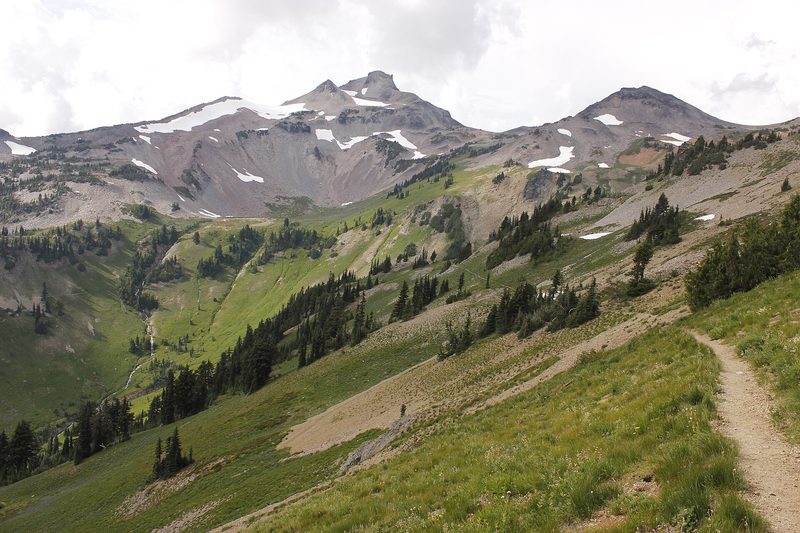
Six pairs of shoes and seven months on the Pacific Crest Trail took Nancy Zelick from Mexico to Canada
How a retired Intel researcher from Baker City, Oregon, walked the Pacific Crest Trail from Mexico to Canada in about seven months: the snow, the gear, the food and why she thinks pace mattered more than youth. How to start multi-day hiking, or build towards a long trail if you already walk.
More like this
Gentle
Watch a meteor shower
Gentle
Learn 20 constellations by sight
Moderate · Florida, East Midlands
Visit the Kennedy Space Center
Gentle
See Saturn's rings through a telescope
Moderate
Get an amateur radio licence
Gentle
Watch a rocket launch from Florida's Space Coast