Learn 20 constellations by sight
A friend has invited you to do this with them.
Once you can find the Plough and Cassiopeia, you can hop from star pattern to star pattern until the night sky becomes a map you can read without an app. It needs only a sky chart, a planisphere and a few clear evenings a month.
GentleUnder £100 / $130MonthsOutdoorsAlone or with othersUK and USAutumn to spring, when nights are dark
Christmas present ideas for someone who wants to learn 20 constellations by sight
Presents that help someone get started, drawn from this page. They are ideas, not recommendations: we have not tested any of the products, so check sizes and details before you buy.
Kit to give
- PlanisphereAmazon to show which constellations are up on a given date and time
- Red-light torchAmazon to read a star chart outside without losing your night vision
- Pocket notebookAmazon to record or sketch each constellation as you find it
Or give your company
Some of the best presents cost little: offer to go along the first time. Print a promise card to put under the tree.
Some of these are affiliate links: if you buy or book through them we may earn a commission at no extra cost to you. Amazon links are searches, so compare what comes up.
More Christmas gift ideas for people who love doing things Stocking fillers
How to go about it
The Society for Popular Astronomy, a UK society founded in 1953, suggests starting in the north. Polaris, the Pole Star, is always in the same place in the sky. The two end stars of the Plough point to it, and carrying the line on brings you to Cassiopeia, a W shape. One of the two is always up, and their stars are bright enough to see from anywhere but a city centre.
From there, the society recommends picking one obvious pattern at a time and working outwards, joining stars as the lines on a map do. This is star hopping. Use a map for the time you are actually outside, such as a planisphere, a circular star map you turn to the date and hour, or software like Stellarium. Apps help with names, but finding a pattern yourself is what makes it stick.
Do not start with the zodiac. Some zodiac constellations, such as Libra and Cancer, are faint and hard to see from suburban skies; Auriga and Cygnus are easier. Bright planets lie along the ecliptic and can make a familiar pattern look different.
Ways to structure it
| Route | What it involves | Cost (as last listed) |
|---|---|---|
| Society for Popular Astronomy (UK) | Free step-by-step guide on its website; Popular Astronomy magazine for members | £29 a year UK adult; £46 Europe and rest of world |
| Astronomical League Constellation Hunter (US) | Naked-eye sketches of each constellation with date, place and sky conditions; Northern and Southern Skies certificates and pins | League membership needed, through a local society or as a member-at-large; programme fee not listed |
| Planisphere and printed sky maps | Self-led, a new pattern each clear night | Price of a planisphere |
The Constellation Hunter programme asks for stars seen with the unaided eye only; anything you could only see through binoculars stays out of the sketch.
How to start
- Find the Plough (the Big Dipper in the US) and follow its two end stars to Polaris, then on to the W of Cassiopeia.
- Get a planisphere or print a monthly sky map, and add one new constellation next to one you already know each clear night.
- Keep a list or sketch of each one you find; in the US, the Astronomical League's Constellation Hunter programme gives you a structure and a certificate.
Where to go
- Society for Popular Astronomy, learning the constellations step by step UK
- Society for Popular Astronomy, join UK
- Astronomical League, Constellation Hunter observing program US
We opened these links on 19 November 2026 and found them to be what we say. Dates, places and prices are on the official page, where they stay up to date.
Plan this
Two ways to plan it.
Plan it yourself Free
The links you need to book it, get there, find somewhere to stay and eat, and see what else there is to do nearby. They are searches for you to run; nothing is saved.
Show the links
Plan it with dates
Pick a day, or a month, and we will set out how to get ready, step by step, with a date and a reason for each. A habit needs a fixed slot in the week more than a plan, so the planner gives it one and checks in gently.
Questions people ask
What is the easiest constellation to find first?
The Society for Popular Astronomy starts with the Plough (Big Dipper), whose two end stars point to Polaris, and then Cassiopeia.
What is a planisphere?
A circular star map with a mask. You set the date and time and it shows only the stars above the horizon at that moment.
Should I learn the zodiac constellations first?
The Society for Popular Astronomy advises against it, as some are faint and hard to see from suburban skies. Auriga and Cygnus are easier.
Where this comes from: Society for Popular Astronomy, Learning the constellations step by step (page 1); Society for Popular Astronomy, Learning the constellations step by step (page 2); Society for Popular Astronomy, Join the SPA; Astronomical League, Constellation Hunter Observing Program. Opened 19 November 2026.
Read next

An asteroid called Leilani, found by Todd Fisher in old telescope images, remembers a neighbourhood lost to lava
How a citizen scientist with no training in astronomy found a new asteroid in eight-year-old telescope images, why he named it after Leilani Estates, and how to join the same search from a laptop.
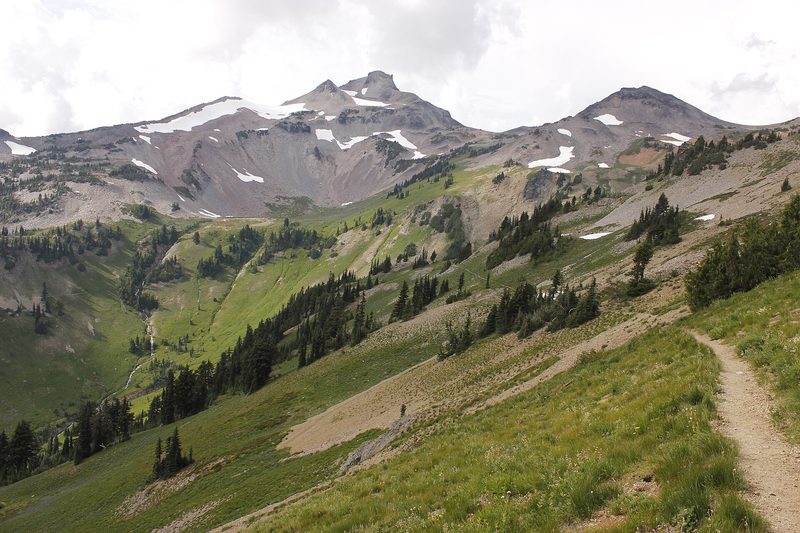
Six pairs of shoes and seven months on the Pacific Crest Trail took Nancy Zelick from Mexico to Canada
How a retired Intel researcher from Baker City, Oregon, walked the Pacific Crest Trail from Mexico to Canada in about seven months: the snow, the gear, the food and why she thinks pace mattered more than youth. How to start multi-day hiking, or build towards a long trail if you already walk.
More like this
Gentle
Look through a telescope at an astronomy society
Gentle
Watch a meteor shower
Gentle
Spend a night under the stars at an International Dark Sky Place
Gentle
Learn astrophotography
Gentle
Spot the International Space Station passing over
Gentle
Watch a show in a planetarium dome
Moderate
Learn celestial navigation with a sextant