Curious · 19 November 2026 · 4 min read
Hot water, a school fridge in Tanzania and the freezing puzzle named after Erasto Mpemba
In 1963 a secondary-school student in Tanzania put a hot ice-cream mix in the fridge and saw it freeze first. His teacher waved it away; a visiting physicist did not. Sixty years on, nobody agrees on whether hot water really beats cold, and the argument has spread far beyond the freezer.

In 1963, at a secondary school in Tanzania, a student named Erasto Mpemba made ice cream. He boiled milk with sugar, and instead of letting the mixture cool, he put it straight into the fridge. It froze before the batches his classmates had made.
Quanta Magazine, which names the school as Magamba Secondary School, says that an hour and a half later his mix had set while the others were still a thick slurry. Mpemba went on to test hot and cold water and got the same result.
Three versions of the ice cream
Every account agrees on the hot mix and the fridge. They disagree on why he put it in hot.
In Philip Ball’s 2006 account for Physics World, the class had been told to boil the milk and let it cool first, and Mpemba skipped the cooling because he feared losing his place in the fridge. Quanta, in 2022, describes a rush for the last ice tray. Chemistry World, the Royal Society of Chemistry’s magazine, tells it the other way round: a friend, trying to finish first, had deliberately not heated his batch as much.
The teacher’s reply also comes in more than one version. In Physics World he dismisses it as Mpemba’s own physics rather than the universal kind; in Quanta he tells the boy he was confused and that it could not happen. Both say the same thing: the textbook said no.
A visiting physicist listens
Denis Osborne, a physicist at University College in Dar es Salaam, visited the school. According to Quanta, Mpemba asked him why, if you take two beakers of water at 35°C and 100°C and put them in a fridge, the hotter one freezes first.
Osborne did not laugh it off. He had a technician repeat the experiment. Here the sources part again: Physics World says the tests seemed to show that Mpemba was right, while Quanta says Osborne concluded they were crude.
Either way, in 1969 the two published a paper together in the journal Physics Education. By then Mpemba was at the College of African Wildlife Management in Moshi. His half of the paper opens: “My name is Erasto B. Mpemba, and I am going to tell you about my discovery, which was due to misusing a refrigerator.” Osborne drew a wider lesson, quoted by Quanta: “It points to the danger of an authoritarian physics.”
Not a new idea
Mpemba was not the first to notice. Physics World points out that Aristotle, writing in about 350 BC, Francis Bacon and René Descartes all claimed that hot water can freeze faster. In the same year as the Physics Education paper, George Kell of the National Research Council of Canada reported it in the American Journal of Physics. What Mpemba and Osborne added was a careful test, and his name stuck to the effect.
Does it actually happen?
That is the part nobody has settled. Physics World called the effect frustratingly hard to reproduce in 2006. In 2012 the Royal Society of Chemistry offered £1,000 for the best explanation. Its education site says the competition drew 22,000 entries, and the winner, announced in January 2013, was Nikola Bregović of the University of Zagreb in Croatia. He thought convection currents played a part, and Chemistry World reports that he never saw the effect when he stirred the water.
In 2016 Henry Burridge of Imperial College London and Paul Linden of the University of Cambridge looked again. Quanta reports that they found the result depended on where the thermometer sat: a height difference of even a centimetre could produce false evidence. Of the studies they examined, only Mpemba and Osborne’s showed an effect too large to blame on that kind of error.
Meanwhile the idea has spread. Physicists now speak of “Mpemba effects” in other materials, from crystalline polymers to tiny glass beads. Quanta describes a 2020 experiment in Nature, with 1,000 trials, that found a strong effect in a system of beads. Water itself, the magazine says, has proved the slipperiest case of all.
So the honest answer is that hot water may sometimes freeze first, under some conditions, and that the argument is about which ones. That a student’s question about ice cream is still being tested is the best part of the story.
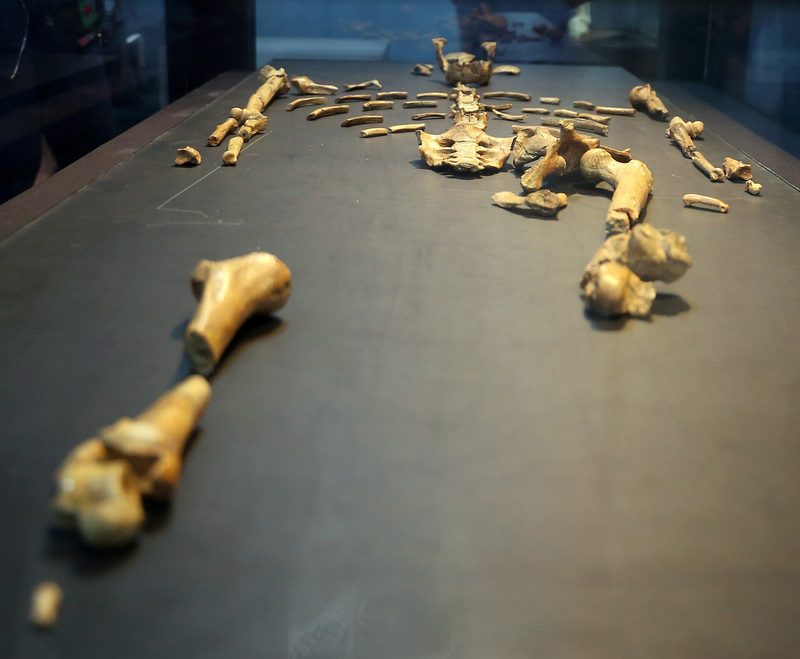
For another kitchen discovery with a famous story attached, read how Percy Spencer came to invent the microwave oven, and why the melted chocolate bar may be too neat, or how a team in Ethiopia found the fossil skeleton known as Lucy.
Sources
- Does hot water freeze first? — Physics World (IOP Publishing), by Philip Ball, 29 March 2006
- Controversy Continues Over Whether Hot Water Freezes Faster Than Cold — Quanta Magazine, by Adam Mann, 29 June 2022
- Hot water sometimes freezes faster than cold. The reason still isn't entirely clear — Chemistry World (Royal Society of Chemistry), accessed 19 November 2026
- The Mpemba effect — Royal Society of Chemistry, Education, accessed 19 November 2026
Quotes are taken from the sources above. We link to the original reporting so you can read the full story.
Was this one for you?