Explore · 14 October 2026 · 3 min read
Trevor Barry's backyard telescope in Broken Hill caught a ten-sided wave on Saturn
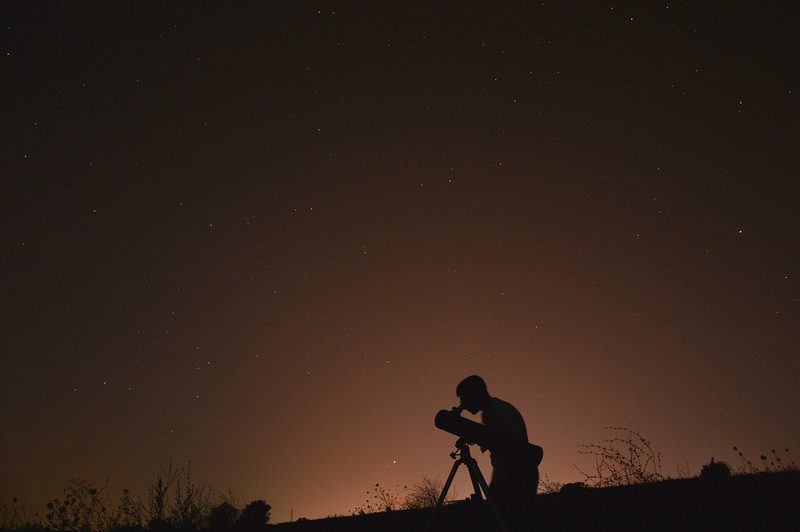
Trevor Barry, a former mine worker in his 70s from Broken Hill in outback Australia, is a co-author of a paper describing a ten-sided wave around Saturn's south pole. He spotted it with a telescope he built himself.
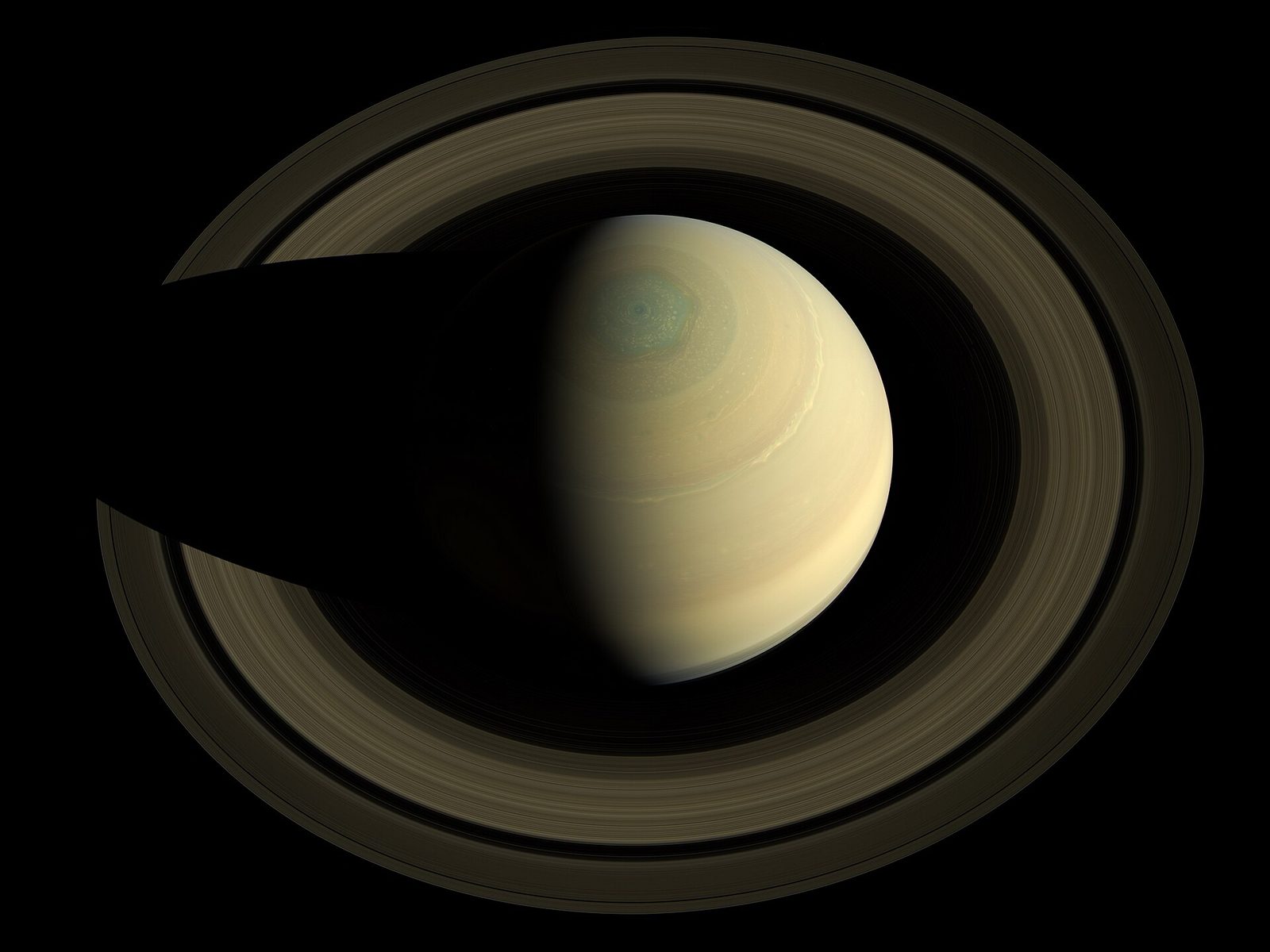
In mid-2024 Trevor Barry was taking pictures of Saturn from a dome in his back yard in Broken Hill, in outback New South Wales, when he noticed a pattern of bright spots near the planet’s south pole. He described it to the professor he works with as a ripple.
It was a wave. In September the journal Science Advances published a paper describing a ten-sided shape, a decagon, circling Saturn’s south pole. ABC News reports that it is the first large jet pattern seen in the planet’s southern hemisphere. Barry, a former mine worker in his 70s who left school after Year 10, is one of the authors.
“All the other authors are professors or PhDs but there’s Trevor the mine worker from Broken Hill.” — Trevor Barry, to ABC News
A dome built from a water tank
Barry spent 30 years in Broken Hill’s mines as an electrical machinist and fitter, according to National Seniors Australia. He took up stargazing seriously in the early 2000s, then studied for a Graduate Certificate of Science in astronomy online with Swinburne University of Technology. He graduated in 2005 with straight High Distinctions and the university’s award for the top graduating student on the course.
He designed and built his own observatory and several telescopes. The dome took about a decade and is made partly from a rainwater tank and a second-hand washing machine motor.
Since 2008 he has worked with Agustín Sánchez-Lavega, a planetary scientist at the University of the Basque Country in Spain. That first year, Swinburne records, Barry photographed a white spot on Saturn that turned out to be an electrical storm NASA researchers were already studying.
Never mind ripple
Barry sent the new images to Spain.
“Agustín got back to me, and he said, ‘Well, Trev, never mind ripple, think wave’.” — Trevor Barry, to ABC News
Barry turned his pictures into polar projections, maps that look straight down on the pole. He told ABC News the detail showed only on nights of very steady air. A French amateur, Jean-Paul Oger, also picked up the band, Smithsonian Magazine reports, and Hubble images taken in 2023 by Amy Simon of NASA’s Goddard Space Flight Center had caught its beginnings.
The shape recalls the hexagon at Saturn’s north pole, found by the Voyager flybys in 1980 and 1981. Saturn’s south pole was turned away from Earth from 2012 to 2023, so nobody knows exactly when the decagon formed, why, or whether it will last. Barry plans to keep watching.
“He’ll track it over time, and that really makes it a lot easier for us to say ‘yes, that is real’.” — Amy Simon, NASA, to ABC News
Why this matters
Large telescopes look at Saturn now and then. Someone with a dome in the garden can look on every clear night for years, and Simon told ABC News that what Barry’s observatory gives is “very consistent results, high quality images”.
Looking up may also do something for the looker. In a study led from the University of California, San Francisco, 52 volunteers took a 15-minute walk at least once a week for eight weeks. Half were asked to look out for things that gave them a sense of awe. That group reported more compassion and gratitude in daily surveys; the other half, who walked more often, showed no such change. It was a small study, and the authors called the effects moderate.
Your own look at Saturn
Saturn was at opposition on 4 October, BBC Sky at Night Magazine reports: opposite the Sun, so it is up all night. With the naked eye it is an off-white point that does not twinkle. The rings need a telescope, and the magazine suggests a 75mm (3-inch) refractor or larger. They are opening as Saturn’s south pole tips towards Earth, the same tilt that brought the decagon into view.
You do not need to own a telescope. Our beginner’s guide to stargazing explains what to bring and lists observatories and astronomy societies near you; the box below has a few. For other amateurs in the scientific record, read about David Smith and his hat-shaped tile and Jeremy Lockwood’s three dinosaurs.
Sources
- Backyard astronomer from Broken Hill contributes to world-first Saturn discovery — ABC News (Australia), 7 September 2026
- A mysterious decagon unexpectedly appeared around Saturn's south pole — Smithsonian Magazine, 3 September 2026
- Trevor Barry — Swinburne University of Technology alumni stories, accessed 14 October 2026
- Terrestrial Trevor: the retiree with stars in his eyes — National Seniors Australia, 31 August 2023
- Saturn at opposition, October 2026 — BBC Sky at Night Magazine, 1 October 2026
- 'Awe walks' boost emotional well-being — University of California, San Francisco, 21 September 2020
- Want to get into astronomy without buying a telescope or binoculars? — Royal Museums Greenwich, accessed 14 October 2026
Quotes are taken from the sources above. We link to the original reporting so you can read the full story.
Was this one for you?