Explore · 29 September 2026 · 4 min read
Fossil hunting for beginners: where to go, what to bring and what you can keep
Fossil hunting asks for a pair of boots, a tide table and a bit of patience. On the right beach you are likely to find something on your first morning. Here is how to start, what is hard about it, and where to go in the UK and the US.

Fossil hunting has a reputation as a specialist’s hobby, all rock hammers and Latin names. On a good beach it is closer to beachcombing. You walk slowly, look down and pick things up. Some of the things you pick up are more than 100 million years old.
The Natural History Museum’s guide to the Isle of Wight quotes Jack Wonfor of Wight Coast Fossils: “Even if you don’t really know what you’re looking for, just by picking rocks up on the beach on the Isle of Wight, you’re almost guaranteed to find a fossil.”
That is the case for starting. Here is the rest of it.
Why it is easier than it looks
You don’t need tools. On most beaches the sea does the digging. Cliffs erode, fossils fall out, and the tide spreads them across the shingle. The Palaeontological Association, the UK’s society for fossil scientists, says you may freely collect loose fossils from most UK beaches.
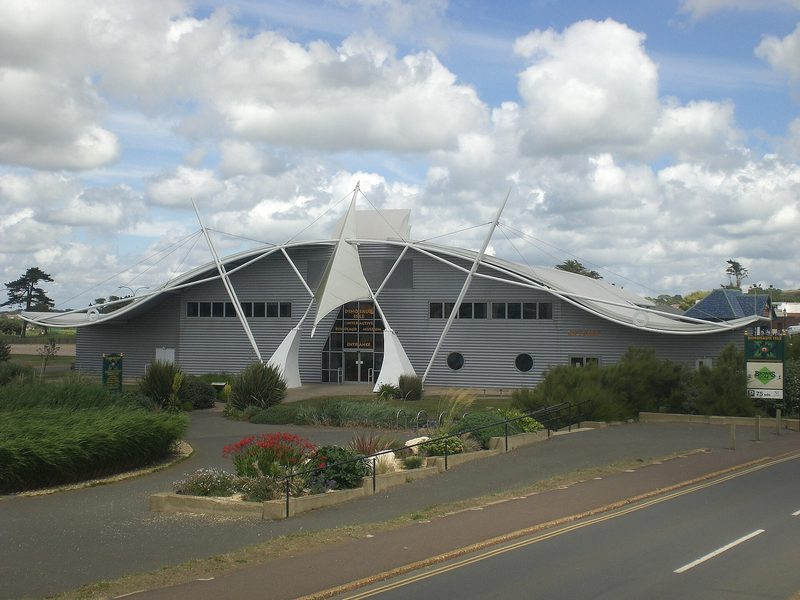
You don’t need to be fit. A fossil hunt is a slow walk with a lot of stopping. The guided walk at Dinosaur Isle on the Isle of Wight lasts about two hours on the beach; the one at Charmouth in Dorset covers a mile of shore in 90 minutes. Several American sites are flatter still: Mineral Wells Fossil Park in Texas is a city park where you walk and pick fossils off the surface.
It costs very little. Dinosaur Isle charges £7 for adults. Mineral Wells is free, and so are the fossil pits at the Aurora Fossil Museum in North Carolina. Wellies or boots with a good grip are the only kit most beginners need.
The honest challenges
Tides and cliffs. This is the one part to take seriously. Both the Natural History Museum and the Palaeontological Association say the same things: check tide times, walk on a falling tide, keep away from the base of cliffs, and never dig into them. Fossils are found on the beach, not in the cliff.
Slippery ground. Seaweed-covered rock and wet clay are the usual trip hazards. Walk on shingle and firm sand where you can, and take a stick if you use one elsewhere.
Not every place lets you keep what you find. Many sites are protected. In the UK, collecting is not allowed at geological Sites of Special Scientific Interest, though picking up fossils from beach shingle generally is. In the US, national parks forbid it: the National Park Service says digging is not allowed at John Day Fossil Beds in Oregon, and points collectors to the public fossil beds behind Wheeler High School in the nearby town of Fossil. At Calvert Cliffs State Park in Maryland you may collect on the open beach but it is illegal to collect beneath the cliffs. Check each site’s rules before you go.
Some days you find nothing. Most hunters come home with a pocketful of ordinary pebbles now and then. The beach changes with every tide, which is why people go back.
The good part
The pleasure is in the looking. You learn to see a ridge on a stone as a shell, a dark glint as a shark’s tooth, a spiral as an ammonite. After an hour you notice things you walked past for years.
It also gets you outside for a long stretch. A University of Exeter study of nearly 20,000 people in England found that those who spent at least two hours a week in nature, in one visit or several, were more likely to report good health and wellbeing, older adults and people with long-term illnesses included. A fossil hunt uses up most of that in one morning.
And now and then it matters. Jeremy Lockwood, a retired family doctor, went from holiday beach walks to naming three new dinosaur species from the Isle of Wight. The Palaeontological Association asks anyone who finds something unusual to leave it in place, photograph it with something for scale, record the location and contact the local museum. That is how many amateur finds reach scientists.
What to bring
- Wellies or walking boots with a good tread
- A small rucksack, a phone and a basic first-aid kit (the Natural History Museum’s list)
- Sandwich bags and a marker to label finds with the place and date
- A tide table, checked on the day
- Something to wipe your hands on; the clay is sticky
How to start this month
- Go with a guide first. One walk teaches you what to look for and the local rules. The box on this page lists places near you.
- Pick one beach or park and go back. Visiting the same place builds your eye faster than chasing new ones.
- Identify what you find. The Natural History Museum runs a free identification service for UK finds; in the US, ask your nearest natural history museum whether it will look at photographs.
- Keep a notebook. Date, place, weather, what you found. After a season it becomes a record of your own patch.
If you want the first eight weeks laid out, the plan behind Jeremy Lockwood’s story does exactly that. For more ways to get outdoors, see our guide to walking holidays for beginners.
Sources
- How to find fossils on the beach — Natural History Museum, accessed 29 September 2026
- Fossil collecting in the UK — The Palaeontological Association, accessed 29 September 2026
- Fossil walks — Dinosaur Isle, accessed 29 September 2026
- Public fossil hunting walk — Charmouth Heritage Coast Centre, accessed 29 September 2026
- Calvert Cliffs State Park — Maryland Department of Natural Resources, accessed 29 September 2026
- Mineral Wells Fossil Park — Visit Mineral Wells, accessed 29 September 2026
- Frequently asked questions — John Day Fossil Beds National Monument, US National Park Service, accessed 29 September 2026
- Two hour 'nature dose' boosts health and wellbeing — European Centre for Environment and Human Health, University of Exeter, 13 June 2019
Quotes are taken from the sources above. We link to the original reporting so you can read the full story.
Was this one for you?